Buying guide
Pergola vs Gazebo: Which Is Right for Your Backyard?
As an Amazon Associate we earn from qualifying purchases. Our picks are researched from the manufacturers’ specifications and are our own editorial opinion.
On this page
The short answer to pergola vs gazebo: a pergola has an open roof of beams or slats that gives partial shade and frames a space, while a gazebo has a solid roof that gives full shade and keeps the rain off. Choose a pergola if you want light shade, climbing plants and an open, airy look, often at a lower cost. Choose a gazebo if you want to sit, dine or host outside whatever the weather. Below we compare them point by point and recommend the pergolas and gazebos we would buy for each job.
Already know which one you want? Jump to our full guides to the best pergolas and the best gazebos.
Pergola vs Gazebo: Key Differences
| Pergola | Gazebo | |
|---|---|---|
| Roof | Open beams or slats; some add a fabric canopy or louvers | Solid roof (polycarbonate, steel or shingles) |
| Shade | Partial, dappled shade; full shade only with a canopy | Full shade all day |
| Rain protection | Little, unless fitted with a solid or louvered roof | Yes, keeps furniture and guests dry |
| Sides | Open; curtains optional | Often sold with curtains and mosquito netting |
| Shape | Square or rectangular, freestanding or attached to the house | Square, rectangular, hexagonal or octagonal, usually freestanding |
| Plants | Built for climbing vines on the top beams | Not designed for vines |
| Typical price tier (kits) | $$ to $$$ | $$$ for hardtops |
| Best for | Defining an outdoor room, light shade, gardens | Dining and sitting outside in sun and rain |
What Is a Pergola?
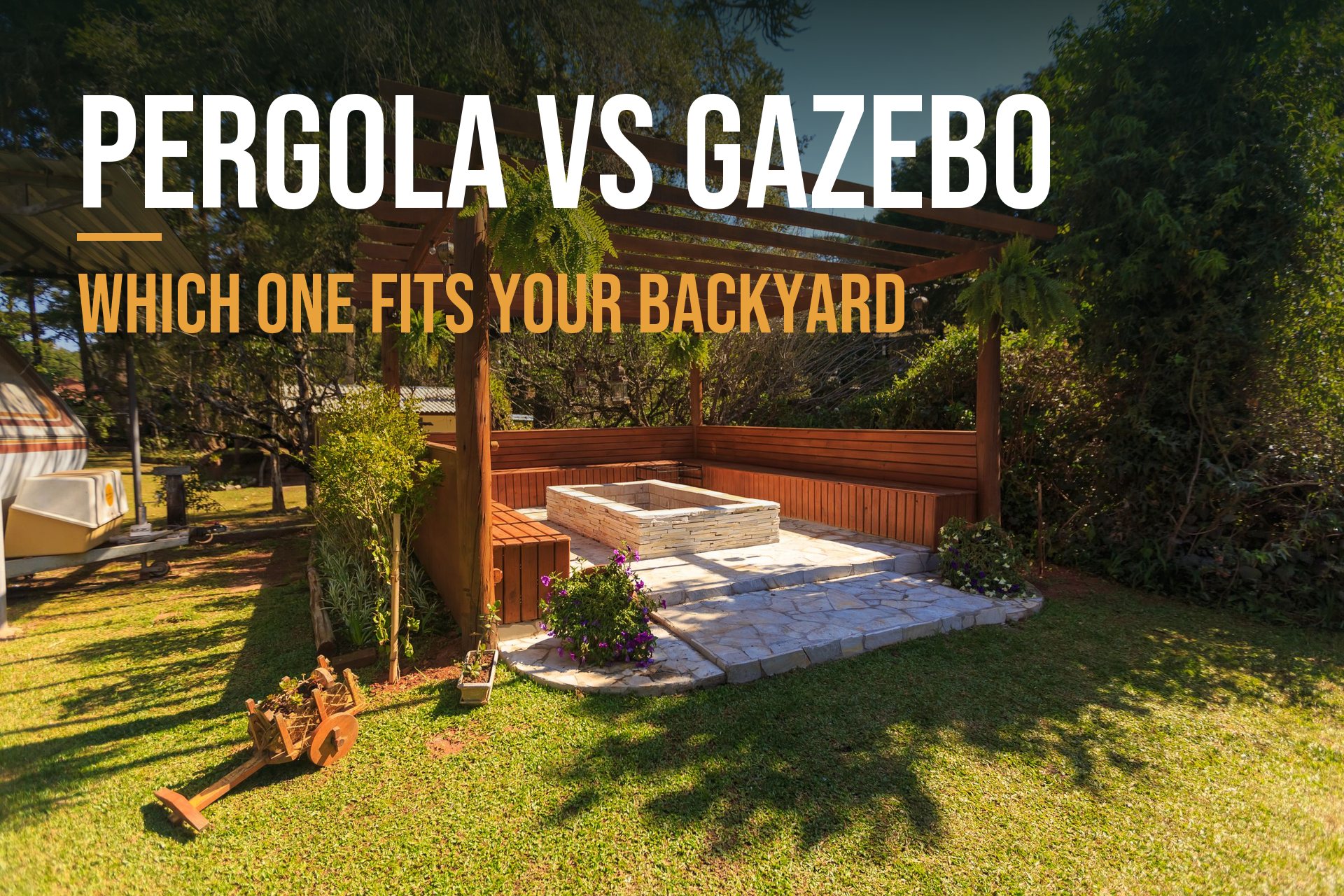
A pergola is a structure of posts that hold up an open grid of beams and rafters. It was originally built to support climbing plants, and it still does that best: wisteria, grapes, roses or clematis grow across the top and fill in the shade over a few seasons. Without plants or a canopy, the beams cast striped, dappled shade that moves through the day.
Pergola Materials
Cedar and redwood are the traditional choices and look the most natural, but need staining or sealing every few years. Vinyl needs almost no care. Aluminum and powder-coated steel are the most common in modern kits, often with a retractable fabric canopy or adjustable louvers. Our affordable pergolas guide covers metal kits at lower price tiers.
Freestanding or Attached
A freestanding pergola stands on four or more posts anywhere in the yard. An attached pergola (sometimes called a lean-to) fixes one side to the house wall, which extends the home outward over a patio or deck and needs fewer posts.
What Is a Gazebo?
A gazebo is a freestanding, roofed structure with open sides, traditionally octagonal and often raised on a floor. Modern gazebo kits are usually square or rectangular, with an aluminum or steel frame and a hard roof of polycarbonate or galvanized steel. Most come with curtains and mosquito netting on tracks, so you can close the sides for privacy and bugs.
Hardtop vs Soft-Top Gazebos
Hardtop gazebos have a rigid roof, stay up year round and handle rain and some snow, depending on the model. Soft-top gazebos use a fabric canopy, cost less, and should be taken down or have the canopy removed before winter. When a soft top wears out, a replacement canopy brings it back.
Pop-Up Canopies
A pop-up canopy is a portable gazebo: a folding steel frame and a fabric roof that sets up in minutes for parties, markets or the beach. It is not meant to stay up through storms or winter. See our guide to pop-up canopy gazebos.
Which Should You Choose?
Choose a Pergola If
- You want light, dappled shade rather than full cover.
- You want to grow vines or hang lights and plants overhead.
- You want to define a patio or deck as an outdoor room without closing it in.
- You want the structure attached to the house.
Choose a Gazebo If
- You want to eat or sit outside in rain as well as sun.
- You want full shade over a hot tub, grill area or dining table.
- You want curtains and netting for privacy and bugs.
- You want a standalone focal point away from the house.
The Middle Ground: Pergolas With a Roof
The line between the two is blurring. Pergolas with retractable canopies, louvered aluminum roofs or polycarbonate panels give gazebo-like cover with a pergola look, and some kits are sold as “pergola gazebos”. If you want shade you can open to the sky at night, a retractable-canopy pergola is the best of both.
Cost, Installation and Permits
Kit pergolas and soft-top gazebos sit in the mid price tiers, while hardtop gazebos and large cedar pergolas sit in the premium tier. Installation takes two or three people and from a few hours to a full day. Both structures should be anchored to concrete footings, a slab or a deck frame as the maker specifies, because wind can lift them. Many towns and HOAs have rules on size, height and distance from property lines, so check local building codes before ordering a large or attached structure.
Best Pergolas and Gazebos We Recommend
These picks come from our full pergola and gazebo guides. Specs are from the makers’ listings.
Pergolas

Backyard Discovery Beaumont 12x10 Cedar Pergola
The Backyard Discovery Beaumont is our pick for a classic wood pergola. It is 100% cedar, 12 by 10 feet, with dual structural cross beams, 5.5 by 5.5 inch posts, a multi-level trellis roof and corbels in a medium brown stain. Backyard Discovery says it has been tested to withstand 100 mph winds when anchored as the manual specifies.
Pieces arrive pre-cut, pre-drilled and pre-stained, with step-by-step instructions in the BILT app. A patented PowerPort mounts on a post with 3 outlets and 3 USB ports (you supply the power). The warranty is 1 year on parts and 5 years pro-rated on the wood for rot and decay.
✅ Pros
- Solid cedar with 5.5-inch posts
- 100 mph wind rating
- Pre-cut, pre-drilled and pre-stained
- PowerPort outlets on a post
❌ Cons
- Open trellis gives only partial shade
- Wood needs restaining over time
Best For: Gardens and patios where you want a real wood pergola for vines and lights.

Tangkula 10x13 Aluminum Pergola with Retractable Canopy
The Tangkula is our pick for a pergola with shade on demand. The powder-coated aluminum frame resists rust and covers 13 by 10 feet at 8 feet high. A yarn-dyed canopy runs on a rope loop, so you can close it for shade, open it to the sky or stop it anywhere, and hooks lock it so it does not blow from side to side.
Four 7 by 7 inch metal feet have pre-drilled holes for anchoring, and the open trellis top supports climbing plants when the canopy is pulled back. The fabric handles sun and light rain, not storms.
✅ Pros
- Retractable canopy
- Rust-resistant aluminum frame
- Trellis top for vines
- 13 x 10 foot footprint
❌ Cons
- Canopy is not a storm roof
- No wind rating on the listing
Best For: Patios that want pergola style with real shade on sunny afternoons.
Gazebos

Aoxun 12x10 Hardtop Gazebo with Polycarbonate Double Roof
The Aoxun 12x10 is our pick for a hardtop gazebo. The double-layer polycarbonate roof blocks harmful UV while letting air circulate, and the thick powder-coated frame resists scratching, peeling and rust. It comes with removable polyester curtains and zippered inner netting against mosquitoes, plus hooks under the roof for a fan or lights.
Aoxun numbers every part and says two or three people can assemble it in 2 to 3 hours. On grass it must be fixed with ground spikes and wind ropes; on a patio, bolt it down.
✅ Pros
- Double polycarbonate roof
- Curtains and mosquito netting included
- Hooks for fans and lights
- Numbered parts
❌ Cons
- Must be anchored, especially on grass
- Premium price tier
Best For: Patios where you want to dine outside in sun and rain.

YOLENY 10x13 Hardtop Gazebo with Double Polycarbonate Roof
The YOLENY 10x13 is our pick for a slightly larger hardtop. It has a ventilated double-layer polycarbonate roof, a powder-coated frame, and a double-track system so the privacy curtains and mesh netting slide independently. YOLENY says it seats 6 to 8 people.
The base is pre-drilled and comes with expansion screws for concrete. Installation takes 2 to 3 people about 5 hours, per the maker.
✅ Pros
- Room for 6 to 8 people
- Double-track curtains and netting
- Ventilated double roof
- Concrete anchors included
❌ Cons
- Longer assembly
- Large footprint
Best For: Larger patios and hot tub covers.
Portable Gazebo
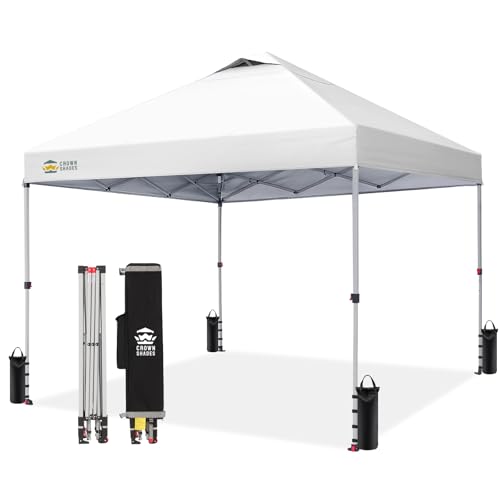
CROWN SHADES 10x10 Pop Up Canopy
The CROWN SHADES 10x10 is our pick if you need a gazebo only sometimes. A patented one-push center lock raises the steel frame in seconds without tools, the 150D fabric is water and flame resistant (CPAI-84) with UPF 50+ protection, and three height settings adjust the headroom.
It stores with the fabric attached, rolls on wheels in the feet, and comes with 4 sandbags, 8 stakes and 4 guy ropes. CROWN SHADES gives it a 2-year limited warranty. Take it down in high wind.
✅ Pros
- One-push setup in seconds
- UPF 50+ water-resistant fabric
- Wheels in the feet
- 2-year limited warranty
❌ Cons
- Not a permanent structure
- Must be weighted or staked
Best For: Parties, markets and renters who cannot install a permanent structure.
❓ Frequently Asked Questions
Conclusion
Start with how you will use the space: shade and style point to a pergola, weather protection points to a gazebo. Then check your footprint, local rules and how you will anchor it. To finish either one, add outdoor curtains for privacy and a patio heater for cool evenings.