Buying guide
How to Clean an Outdoor Rug
As an Amazon Associate we earn from qualifying purchases. Our picks are researched from the manufacturers’ specifications and are our own editorial opinion.
On this page
Knowing how to clean an outdoor rug comes down to four moves: get the loose dirt out, scrub gently with mild soap and water, rinse thoroughly, and dry the rug completely on both sides. Everything else in this guide is a variation on those four steps, matched to what your rug is made of and how dirty it is. A rug that sits on a covered porch needs a quick shake and an occasional wash, while one under trees, in the rain, or beside a grill needs a deeper clean and a faster dry.
If you are still choosing a rug, our guides to the best outdoor rugs and the best cheap outdoor rugs cover what to buy.
Check the Material First
Before any water touches the rug, find the care label or the maker's care page. The material decides which method is safe, and the label overrides anything general you read here, including this guide.
Polypropylene and Polyester
Most indoor/outdoor rugs are made from synthetic fibers, usually polypropylene or polyester. They are built to shrug off sun, rain and spills, so they tolerate hosing, scrubbing and long rinses. Ruggable, for example, makes its outdoor rug covers from polyester with UV-resistant fibers, according to its outdoor rug care page. Synthetic rugs are the easiest to clean, and every method below works on them unless the label says otherwise.
Natural Fibers
Jute, sisal, seagrass and cotton are sold for patios and porches too, but they behave differently. They soak up water, take a long time to dry, and can darken, weaken or grow mildew if they stay damp. Do not hose them down or soak them. Vacuum them, blot spills right away with a lightly damp cloth, and follow the maker's instructions for anything more. If the label is missing and you cannot tell the material, test a small hidden corner before you wash the whole rug.
Routine Cleaning
A quick clean every few weeks, and after any messy gathering, keeps dirt from working into the fibers. It takes about as long as sweeping the patio.
- Shake or sweep it out. Take the rug off the patio if you can and shake it, or sweep it with a stiff broom to lift leaves, dust and crumbs. Ruggable's care page gives the same first step: shake or sweep the rug to remove loose dirt, dust or leaves before washing.
- Vacuum if the rug is dry and flat-lying. A vacuum pulls out the fine grit that sits at the base of the pile. Use it on dry rugs only, and skip the beater bar on loose weaves.
- Spot clean spills early. Blot with a cloth and a little mild soap and water. Rubbing pushes the spill deeper, so press and lift.
- Let it air out. If the rug is damp from spot cleaning, prop it up or lay it flat in the sun until it is dry before it goes back under furniture.
Moving the rug now and then also helps. Chair legs and planters leave dents and dark rings that are much easier to prevent than to clean.
Deep Cleaning With a Hose and Brush
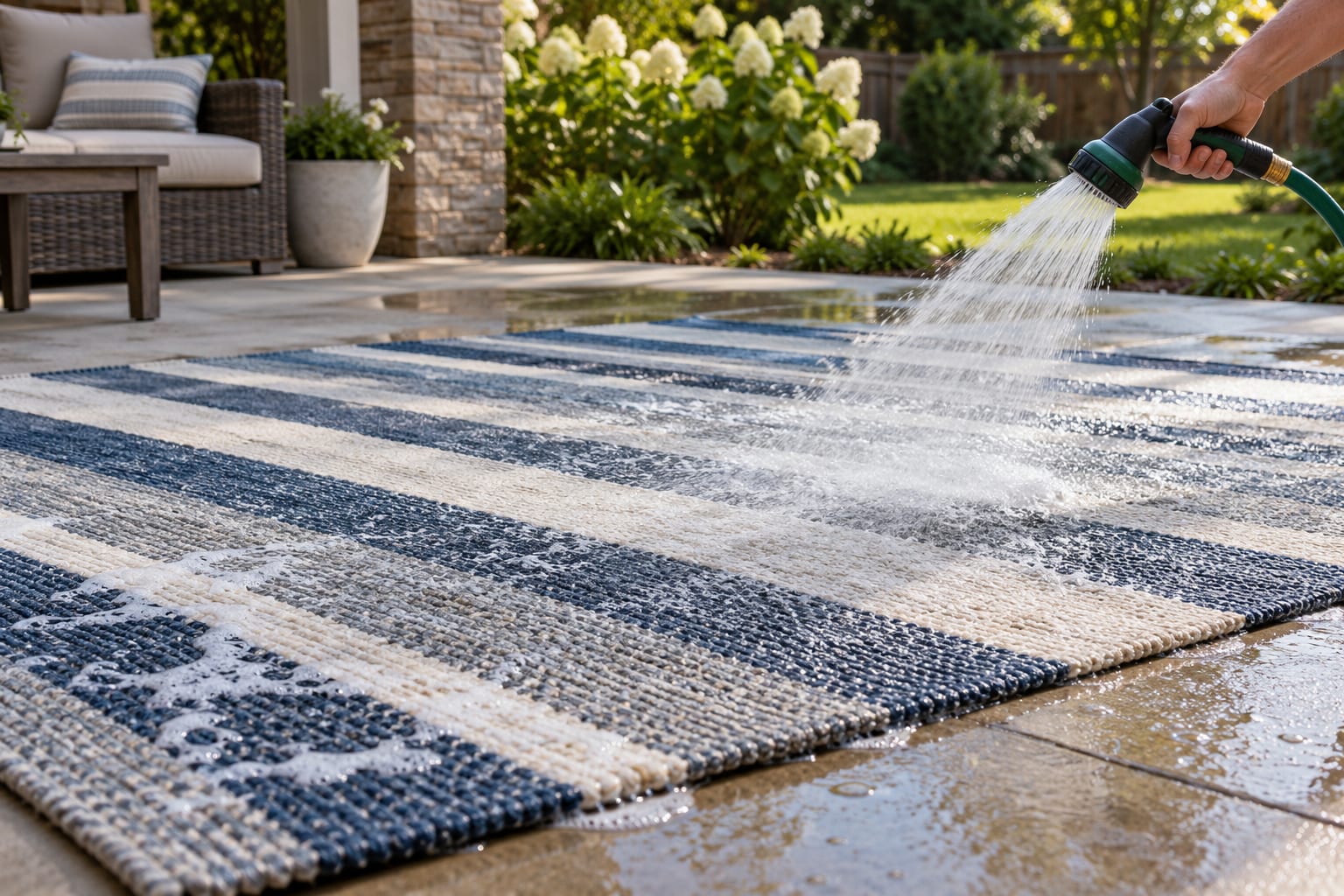
When a rug looks gray, smells musty or has set-in grime, move on to a hose-and-brush wash. You need a garden hose, a bucket, a mild detergent, and a stiff-bristled scrub brush. Pick a sunny, breezy day and a spot that drains, such as a driveway or a clean section of deck.
What You Need
A mild, non-bleach detergent is the safe default. Ruggable recommends exactly that for its washable covers. A dedicated outdoor rug cleaner is a reasonable alternative if the stains are stubborn, as long as the label says it is safe for your fiber. A brush with stiff, firm bristles lifts dirt out of the weave without shredding it.

OXO Good Grips Heavy Duty Scrub Brush
The OXO Good Grips Heavy Duty Scrub Brush is our pick for scrubbing a rug by hand. It has a comfortable, non-slip handle and stiff bristles that work soapy water into the pile and lift grime out. It is a general-purpose brush that also appears in our guide to cleaning patio furniture.
✅ Pros
- Stiff bristles for grimy synthetic rugs
- Easy-grip handle
- Works on furniture, decks and rugs
❌ Cons
- Too stiff for delicate or natural-fiber rugs
- Slow for a very large rug
Best For: Hand-scrubbing polypropylene and polyester rugs.
The Steps
- Remove loose debris. Shake, sweep or vacuum first, so you are not turning dry dirt into mud.
- Wet the rug. Lay it flat on a clean, sloped surface and rinse it with a garden hose. A gentle spray is enough.
- Mix the soap. Add a small amount of mild detergent to a bucket of water. Too much soap is harder to rinse out, and leftover residue attracts dirt.
- Scrub in sections. Work the soapy water into the rug with the brush, moving with the direction of the weave. Let the soap sit for a few minutes on heavily stained areas.
- Rinse thoroughly. Hose the rug until the water runs clear and no suds remain. Soap left in the fibers is the main reason a freshly washed rug gets dirty again fast.
- Squeeze out the water. Push the water out with a squeegee, a clean push broom or by rolling the rug loosely, which helps it dry much faster.
- Dry it completely. See the drying section below. Never lay a damp rug back on a deck or patio.
Can You Pressure Wash an Outdoor Rug?
Sometimes, but it is not the first thing to reach for, and it is not allowed on every rug. A pressure washer can rip out loops, fray edges, push dirt deeper and loosen backing. Check the manufacturer's care instructions first. If they do not mention pressure washing or they say not to, skip it. Ruggable's outdoor care page, for example, sticks to machine washing its covers and rinsing the pad with a garden hose. Natural-fiber rugs, rugs with a latex or rubber backing and rugs with glued seams should never be pressure washed.
If the Manufacturer Allows It
- Choose the widest fan tip and the lowest pressure setting.
- Lay the rug flat on a clean, hard surface, not on grass or soil that will splash dirt back on it.
- Test a hidden corner first and check for fuzzing, color loss or loosened fibers.
- Keep the nozzle well back from the surface and keep it moving. Never aim a concentrated jet at one spot or at the edges and fringe.
- Use sweeping passes in the direction of the weave, then rinse with a regular hose to wash off any soap.
How to Clean an Outdoor Rug Without a Pressure Washer
You do not need a pressure washer at all. The hose-and-brush method above does the job, and so do these low-tech options when you want something quicker or the rug is too big to move.
Wash It in Place
If the rug is glued down or sits on a deck you do not want to move it from, wet it with a hose, scrub with soapy water in small sections, and rinse each section before you move to the next. Push the water toward a drain or off the edge of the patio, and use a squeegee or a wet vacuum to remove standing water so it does not pool underneath.
Which Cleaner to Use
Plain mild dish soap is a common choice for light cleaning, and it is the kind of mild detergent most care guides describe. For heavier jobs, a cleaner made for outdoor carpet and rugs can lift grease and ground-in dirt, and an oxygen-based cleaner is a common choice for organic stains. Whatever you use, check that it is safe for your fiber and colors, test it on a hidden corner, and rinse it out completely.
Removing Mildew and Stains
Mildew grows where a rug stays damp and gets little sun. Ruggable's guidance is blunt about the cause: prevent mildew by making sure the rug does not stay wet for long periods. If it does appear, its advice for a washable cover is to shake off debris, wash it, and let it dry fully before putting it back outside.
Mildew
- Take the rug into the sun and brush off dry mildew outdoors so the spores do not drift indoors.
- Scrub the affected area with a mild detergent and water, or with a cleaner the manufacturer approves for mildew.
- Rinse thoroughly and let the rug dry completely, in the sun if the fiber allows it.
Use only what the maker recommends. Home remedies such as vinegar or bleach are sometimes suggested online, but they are not a universal rule: bleach can strip color and damage fibers and backings, and what suits one rug may harm another. Check the care label before you use either one.
If the musty smell comes back after the rug is fully dry, look at what is underneath it. Trapped moisture on a deck or concrete is often the real cause, and a rug pad or a raised mat can improve airflow.
Food, Grease and Other Stains
Act fast. Scrape off any solids, blot liquids with a clean cloth, and treat the spot with mild soap and water. Ruggable lists its own spot cleaner or simply soap and water for small stains. For grease, work a little detergent into the spot and let it sit before you scrub. For sap, wine or sunscreen, use the same approach and rinse well, and check the label before using a stronger stain remover.
Can an Outdoor Rug Go in the Washing Machine?
Only if it is sold as machine washable. Most outdoor rugs are too large, too heavy or too stiffly backed for a home washer, and tumbling can ruin the backing and the shape of the rug. Always follow the care label.
Some outdoor rugs are designed to wash. Ruggable's outdoor covers are one example: the cover separates from the rug pad and goes in the machine on cold with a mild, non-bleach detergent, then either air-fluffs in the dryer or dries flat. Ruggable's page says the pad does not need machine washing and can be rinsed with a garden hose. Small, thin, flat-woven mats may also be washable if the label says so.
If the label says nothing about machine washing, assume it is not safe and use the hose-and-brush method.
Drying and Storing
Dry Both Sides
Drying is the step that stops mildew, so do not rush it. Squeeze out as much water as you can, then lay the rug flat or hang it over a railing or line. Turn it over partway through so the underside dries as well. A sunny, breezy day is ideal, but check the label first, since long sun exposure can fade some dyes. Do not put the rug back on the patio until it is dry to the touch all the way through, including the backing. For Ruggable's washable covers, the brand's page says air drying typically takes about 1 to 2 hours, while the pad takes 12 to 24 hours and should dry flat away from direct sunlight to prevent warping. Thick or natural-fiber rugs take longer.
Storing Between Seasons
If you put the rug away for winter, clean it first and make sure it is bone dry. Roll it with the pile facing out, which helps it lie flat when you unroll it, and store it somewhere dry and off the floor. Avoid folding, because creases can stay. Our guide on how to store patio furniture covers the other pieces you may be putting away for the season.
❓ Frequently Asked Questions
Related guides: Best Outdoor Rugs · Best Cheap Outdoor Rugs · How to Clean Patio Furniture · How to Store Patio Furniture