Buying guide
How to Fill a Raised Garden Bed: Layers, Soil Mix & How Much
As an Amazon Associate we earn from qualifying purchases. Our picks are researched from the manufacturers’ specifications and are our own editorial opinion.
On this page
- Layer by Layer: What Goes in a Raised Bed
- How Much Filler and Soil Mix a 4 x 8 Raised Bed Takes
- Raised Bed Fill Calculator
- What Not to Fill a Raised Bed With
- How to Fill a Raised Garden Bed Cheaply
- Bags vs Bulk: Which Is Easier for Your Bed?
- Bagged Mix and Supplies Worth Buying
- Topping Up a Raised Bed Each Year
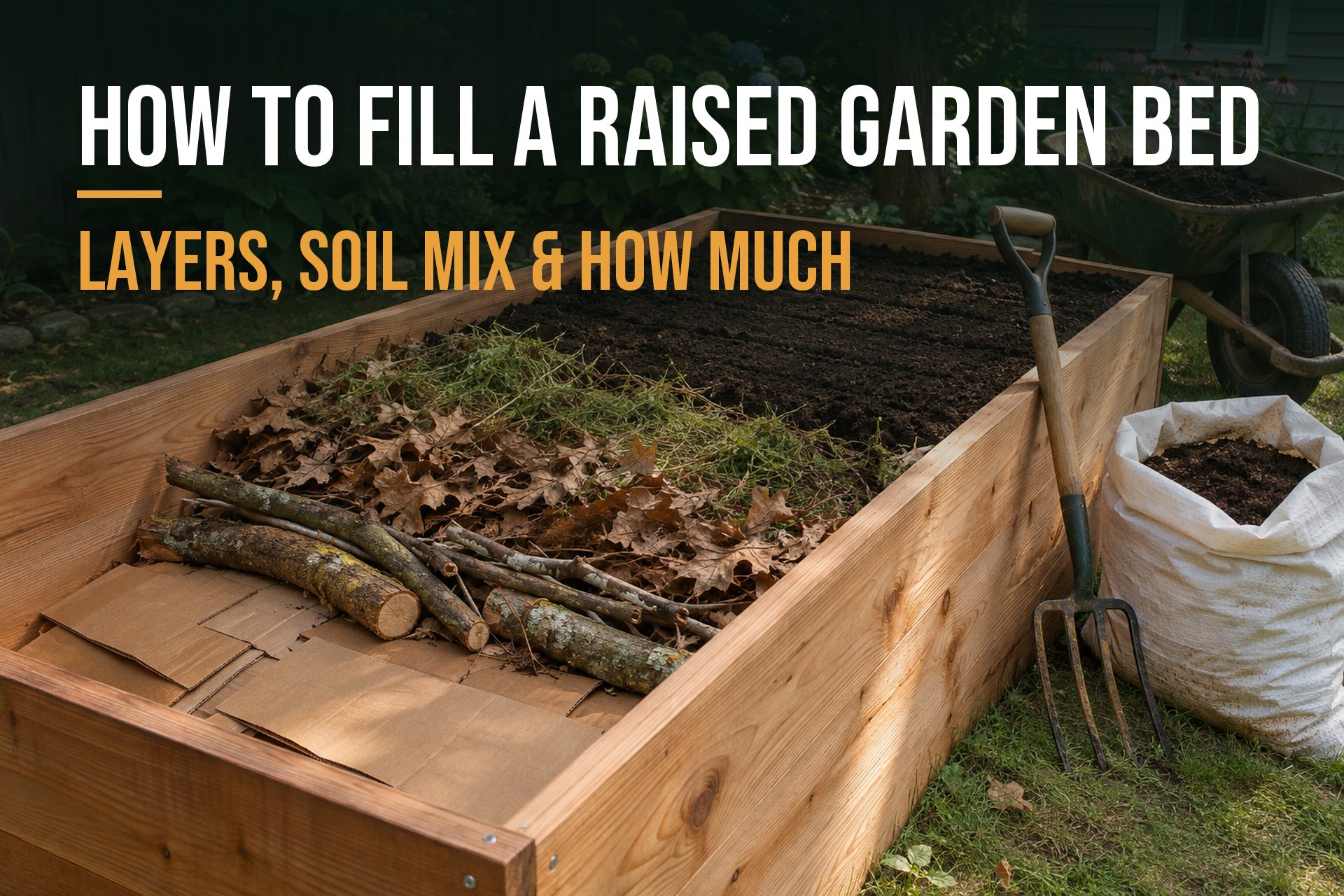
To fill a raised garden bed, lay cardboard on the bottom, then (only if the bed is deeper than about 12 in) fill the bottom third to half with bulky organic material such as logs, branches and leaves, and finish with 8 to 12 in of a soil and compost mix. A common recipe for that mix is roughly 60% topsoil and 40% compost. This page shows the layers, how much of each a 4 x 8 ft bed takes at three heights, and how to fill a bed for less.
Layer by Layer: What Goes in a Raised Bed
Work from the bottom up. For a bed that sits on grass or weeds, this is the order most gardeners use:
- Cardboard. One layer of plain, unprinted cardboard with the tape removed, overlapped by a few inches. It smothers the grass and breaks down within a season. Wet it down so it stays put.
- Logs and branches. The coarse bottom layer, and the idea behind a hugelkultur bed. Rotting wood holds water like a sponge and feeds the bed slowly as it decays. Use untreated hardwood or softwood, and stay away from black walnut.
- Leaves, straw and grass clippings. Pack these in around the branches to fill the gaps. Dry leaves and straw are the "browns"; fresh clippings and kitchen scraps are the "greens".
- A layer of compost. A few inches of finished compost or old topsoil on top of the coarse material, so the soil mix does not fall into the gaps. Water it in so it settles now rather than later.
- The soil mix. The top 8 to 12 in. Use a blend of about 60% screened topsoil and 40% compost, or a ready-made raised bed mix. Fill to about 1 in below the rim.
Beds 12 in deep or less skip steps 2 to 4: it is not worth giving up soil depth to filler. Cardboard, then mix.
How Much Filler and Soil Mix a 4 x 8 Raised Bed Takes
These numbers are for the 4 x 8 ft bed built from 2x6 boards (inside size 93 x 45 in, less the posts). The mix layer is the top 11 in in every case, and the filler takes up the rest of the height. Bags are 1.5 cubic feet, with 10% added for settling.
| Bed height | Bulky filler (bottom) | Soil mix (top) | Bags of mix |
|---|---|---|---|
| 11 in (2 boards) | None, cardboard only | 26.2 cu ft | 20 |
| 16 1/2 in (3 boards) | 5 1/2 in, 13.1 cu ft | 26.2 cu ft | 20 (29 if all mix) |
| 22 in (4 boards) | 11 in, 26.2 cu ft | 26.2 cu ft | 20 (39 if all mix) |
The deeper the bed, the more the filler saves: a 22 in bed needs the same 20 bags of mix as an 11 in one. Filler volume is what you gather, not what you buy: 26 cubic feet is about 1 cubic yard of branches, leaves and clippings. For your own size, use the calculator below. If you are still choosing a height, the raised garden bed height guide covers what each crop needs.
Raised Bed Fill Calculator
Enter the bed size or tap a preset. It gives cubic feet, cubic yards for a bulk delivery and bags. The third preset is a 2 x 6 ft bed on legs with 8 in of soil. A bed on legs is a shallow box, so there is no room for filler; see elevated raised garden bed plans for how to fill one.
Raised bed soil calculator
To size the two layers in a deep bed, run the calculator twice: once with the depth of the soil mix (for example 11 in), and once with the bed height minus that depth for the filler. The soil calculator on the plans page works the same way.
What Not to Fill a Raised Bed With
- Treated or painted wood scraps. Only untreated logs and branches go in the bottom layer.
- Glossy or printed cardboard. Use plain brown cardboard, tape and labels removed. Shiny ads and coated boxes do not break down well.
- Diseased or pest-ridden plants. They can carry the problem into next year's crop. Bin them instead.
- Fresh manure. It is too strong for young roots. Use aged or composted manure only.
- Plain yard soil on its own. It packs down in a bed and drains poorly. Mix it with compost, or buy a raised bed mix.
- Black walnut wood and leaves. They contain a compound that stunts tomatoes, peppers and some other crops.
- Pet waste and meat scraps. They bring pathogens and pests.
How to Fill a Raised Garden Bed Cheaply
Soil is the biggest cost of a raised bed, and most of the savings come from filling the bottom with free material.
- Fill the bottom with what you already have. Fallen branches, pruned limbs, old logs and a few bags of fall leaves cost nothing. Use the 16 1/2 in or 22 in rows in the table above to see how many bags that saves.
- Ask for wood chips. Tree services often drop chips for free, and some towns give them away. Chips work well in the filler layer, and as mulch on top later.
- Check your municipal compost. Many cities and counties sell or give away compost made from yard waste, usually far cheaper per cubic foot than bagged. Ask what it is made of, and whether it was tested.
- Make your own compost. A pile started this fall can supply some of the compost layer by next spring.
- Buy the mix, not the filler. Spend where it matters: the top 8 to 12 in is what the plants live in.
Bags vs Bulk: Which Is Easier for Your Bed?
Bagged raised bed mix is the simple route for one or two beds. Count it by the bed: one 4 x 8 ft bed at 11 in takes 20 bags of 1.5 cubic feet (15 bags of 2 cubic feet), and each additional bed takes as many again. For three or more beds, or for one deep bed, a bulk delivery from a landscape supply yard is usually the cheaper route and saves hauling dozens of bags. Order bulk soil by the cubic yard (27 cubic feet): one 4 x 8 ft bed at 11 in is just under 1 cubic yard, with extra for settling. Ask the supplier for a raised bed mix, or a screened topsoil and compost blend, and have it dumped as close to the bed as possible.
Bagged Mix and Supplies Worth Buying
If you are buying the top layer in bags, these two raised bed mixes are the ones we would look at first. For the bottom of beds where gophers or voles are a problem, a roll of hardware cloth goes in before anything else.

FoxFarm Raised Bed Planting Mix, 1.5 cu ft
A ready-to-use mix made for raised beds, sold in 1.5 cubic foot bags, the size used in the bag counts above. Per the listing, it contains earthworm castings and oyster shell and is meant for vegetables, flowers, fruits and herbs, so you can fill the top 8 to 12 in without mixing your own. At 1.5 cubic feet, a 4 x 8 ft bed at 11 in takes about 20 bags.
✅ Pros
- Ready to use: no mixing topsoil and compost yourself
- Sold in the 1.5 cubic foot size the bag counts are based on
- Works for vegetables, herbs and flowers
❌ Cons
- Bags add up fast for large beds, where bulk soil is easier
- Filling a deep bed with bagged mix alone takes a lot of bags
Best For: one or two beds, top-ups and anyone who wants to skip the mixing.
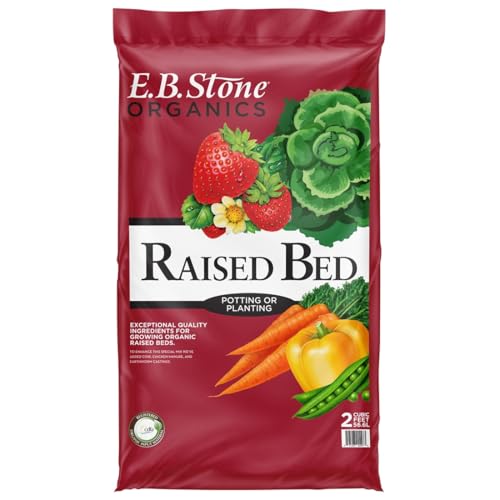
E.B. Stone Organics Raised Bed and Potting Mix, 2 cu ft
An organic raised bed and potting mix in a bigger 2 cubic foot bag, so you handle fewer bags: about 15 for a 4 x 8 ft bed at 11 in, with 10% for settling. The listing says it contains compost and earthworm castings and is made for vegetables, flowers and raised beds. Use it for the top layer of a bed or to refresh soil each spring.
✅ Pros
- 2 cubic foot bags: fewer to carry than 1.5 cubic foot ones
- Organic mix with compost and earthworm castings, per the listing
- Good for yearly top-ups
❌ Cons
- Bagged soil is still the costly way to fill a big bed
- Check the bag size before you order, as it differs from the 1.5 cubic foot bags used in other counts
Best For: gardeners who prefer organic bagged soil in larger bags.

Land Guard 1/2 in Galvanized Hardware Cloth, 48 in x 100 ft
If gophers, moles or voles are around, staple hardware cloth across the bottom of the bed before you add cardboard or anything else. At 48 in wide, one piece covers the bottom of a 4 ft bed with no seams. It is 19 gauge galvanized steel with a 1/2 in mesh that roots can grow through and burrowing animals cannot.
✅ Pros
- 48 in wide: one piece covers a 4 ft bed
- 100 ft roll is enough for many beds
- Roots grow through; burrowing animals do not
❌ Cons
- Cut edges are sharp: wear gloves
- More than a single bed needs
Best For: any yard with gophers or voles. Put it down first, under the cardboard.
Topping Up a Raised Bed Each Year
Every bed sinks. Organic filler rots down, the mix compacts and plants take up nutrients, so an 11 in bed is often 8 or 9 in by next spring. Once the soil is workable, fork the top few inches to loosen it, then add 1 to 2 in of finished compost (about 2 1/2 to 5 cubic feet for a 4 x 8 ft bed) and rake it level. If the bed has dropped more than 3 in, add mix as well. Do not dig all the way down: the layers below are doing their job. Top up after the last crop in fall or before planting in spring, whichever is easier for you.
Keep reading: raised garden bed plans, raised garden bed dimensions, elevated raised garden bed plans and the cinder block raised garden bed guide.