Buying guide
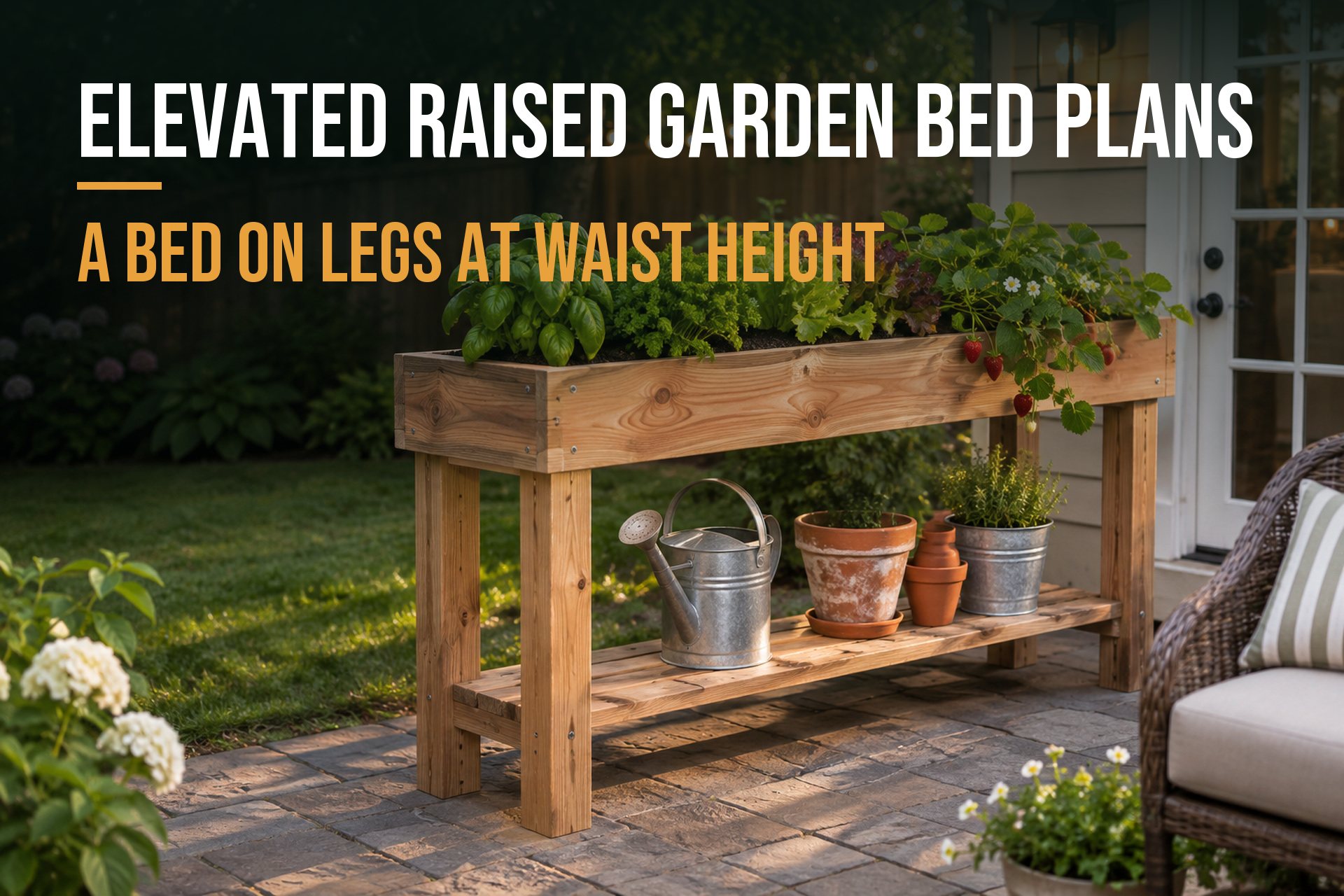
Elevated Raised Garden Bed Plans: Build a Bed on Legs
As an Amazon Associate we earn from qualifying purchases. Our picks are researched from the manufacturers’ specifications and are our own editorial opinion.
On this page
- Which Elevated Raised Bed Plan Should You Build?
- Elevated Raised Garden Bed Plans With Cut Lists
- How to Build an Elevated Raised Garden Bed
- How High Should an Elevated Garden Bed Be?
- Weight and the Bottom of an Elevated Bed
- Filling a Bed on Legs
- Wood for an Elevated Bed
- Rather Not Build? Ready Made Beds on Legs
These elevated raised garden bed plans build a cedar or treated 2x6 box on 4x4 legs at a comfortable working height, so you plant, weed and pick without bending. There are three sizes (2 x 4 ft, 2 x 6 ft and 2 x 8 ft), each with a drawing, a cut list generated from the dimensions, a shopping list and the weight of the soil it will carry. The only tools are a saw and a drill.
Which Elevated Raised Bed Plan Should You Build?
| Plan | Height | Soil | Best for |
|---|---|---|---|
| 2 x 4 ft | 30 in | 4.1 cu ft | Balconies, herbs, a first bed |
| 2 x 6 ft | 30 in | 6.4 cu ft | A patio edge, salad and tomatoes |
| 2 x 8 ft | 32 in | 8.7 cu ft | A long bed along a fence or wall |
All three use a two board box (11 in outside, 8 in of soil once the slats are in), 4x4 legs and 2x4 slats. A 2x6 really measures 1 1/2 x 5 1/2 in, a 4x4 is 3 1/2 in square and a 2x4 is 1 1/2 x 3 1/2 in, so the plans use those sizes. Want a bed that sits on the ground instead? See the raised garden bed plans.
Elevated Raised Garden Bed Plans With Cut Lists
Plan 1: The 2 x 4 ft Elevated Bed
Four legs and no middle support needed. Small enough to move while empty, and the best size to start with.
- Outside size4 ft x 2 ft
- Height30 in
- Soil to fill4.1 cu ft
- Wet soil weight330 to 410 lb
| Part | Lumber | Cut to | Qty |
|---|---|---|---|
| Long box boards | 2x6 | 48 in | 4 |
| Short box boards | 2x6 | 21 in | 4 |
| Corner legs | 4x4 | 30 in | 4 |
| Bottom slats | 2x4 | 21 in | 12 |
| Slat ledgers | 2x4 | 38 in | 2 |
| Long leg braces | 2x4 | 38 in | 2 |
| Short leg braces | 2x4 | 14 in | 2 |
Shopping list
- 4 x 2x6 boards, 8 ft (cedar, or pressure treated rated for ground contact)
- 2 x 4x4, 8 ft long, for the 4 legs
- 5 x 2x4 boards, 8 ft, for the slats, ledgers and braces
- 32 x #9 x 3 in exterior wood screws for the box, plus about 72 x #9 x 2 1/2 in for the slats, ledgers and braces
- Optional: 1/2 in hardware cloth or landscape fabric, 4 ft x 2 ft, to stop soil falling through the slat gaps
- Soil: 4.1 cu ft (0.15 cu yd), 8 in deep, or about 4 bags of 1.5 cu ft with 10% extra for settling
Plan 2: The 2 x 6 ft Elevated Bed
Six legs: the two extra ones sit at the middle of the long sides and carry the soil weight where the boards would otherwise sag.
- Outside size6 ft x 2 ft
- Height30 in
- Soil to fill6.4 cu ft
- Wet soil weight510 to 640 lb
| Part | Lumber | Cut to | Qty |
|---|---|---|---|
| Long box boards | 2x6 | 72 in | 4 |
| Short box boards | 2x6 | 21 in | 4 |
| Corner legs | 4x4 | 30 in | 4 |
| Middle legs | 4x4 | 30 in | 2 |
| Bottom slats | 2x4 | 21 in | 18 |
| Slat ledgers | 2x4 | 29 1/4 in | 4 |
| Long leg braces | 2x4 | 29 1/4 in | 4 |
| Short leg braces | 2x4 | 14 in | 2 |
Shopping list
- 4 x 2x6 boards, 8 ft (cedar, or pressure treated rated for ground contact)
- 2 x 4x4, 8 ft long, for the 6 legs
- 8 x 2x4 boards, 8 ft, for the slats, ledgers and braces
- 40 x #9 x 3 in exterior wood screws for the box, plus about 102 x #9 x 2 1/2 in for the slats, ledgers and braces
- Optional: 1/2 in hardware cloth or landscape fabric, 6 ft x 2 ft, to stop soil falling through the slat gaps
- Soil: 6.4 cu ft (0.24 cu yd), 8 in deep, or about 5 bags of 1.5 cu ft with 10% extra for settling
Plan 3: The 2 x 8 ft Elevated Bed
Six legs and a slightly taller frame for a long bed. The long boards are whole 8 ft lengths, so there is less cutting.
- Outside size8 ft x 2 ft
- Height32 in
- Soil to fill8.7 cu ft
- Wet soil weight700 to 870 lb
| Part | Lumber | Cut to | Qty |
|---|---|---|---|
| Long box boards | 2x6 | 96 in | 4 |
| Short box boards | 2x6 | 21 in | 4 |
| Corner legs | 4x4 | 32 in | 4 |
| Middle legs | 4x4 | 32 in | 2 |
| Bottom slats | 2x4 | 21 in | 24 |
| Slat ledgers | 2x4 | 41 1/4 in | 4 |
| Long leg braces | 2x4 | 41 1/4 in | 4 |
| Short leg braces | 2x4 | 14 in | 2 |
Shopping list
- 5 x 2x6 boards, 8 ft (cedar, or pressure treated rated for ground contact)
- 3 x 4x4, 8 ft long, for the 6 legs
- 11 x 2x4 boards, 8 ft, for the slats, ledgers and braces
- 40 x #9 x 3 in exterior wood screws for the box, plus about 130 x #9 x 2 1/2 in for the slats, ledgers and braces
- Optional: 1/2 in hardware cloth or landscape fabric, 8 ft x 2 ft, to stop soil falling through the slat gaps
- Soil: 8.7 cu ft (0.32 cu yd), 8 in deep, or about 7 bags of 1.5 cu ft with 10% extra for settling
How to Build an Elevated Raised Garden Bed
Tools: a circular saw or miter saw, a drill with a countersink bit and a driver bit, a tape measure, a square and a level.
- Cut the parts. Follow the cut list. Cut all the legs at once so they match, and cut every slat from one setting of the saw stop.
- Build the long sides. Lay two box boards flat, edges tight, and screw them to a leg at each end, with the leg flush with the top of the boards. Do the same for the second long side. Drill pilot holes 1 in from the board ends.
- Join the short sides. Stand the long sides up and screw the short boards to the corner legs, two screws per board end.
- Brace the legs. Screw a 2x4 between the legs on each side, about 6 in above the ground. Without braces the frame racks sideways when you lean on it.
- Add the ledgers and slats. Lay a 2x4 ledger flat along the inside of each long side, its underside flush with the bottom edge of the boards, and screw it in from the outside. On the 6 and 8 ft beds the ledgers come in two pieces, one each side of the middle leg. Lay the slats across them with a 1/4 in gap between slats, notch the slats that meet a leg so they fit around it, and fix each one with two screws per end.
- Line the bottom. Staple hardware cloth or landscape fabric over the slats. Fabric keeps the soil in and lets water out; hardware cloth also keeps out burrowing pests.
- Check it, then fill it where it will stay. Make sure it stands level and does not wobble, then fill it in place. Moving a full bed is not realistic. See how to fill a raised garden bed for the mix.
How High Should an Elevated Garden Bed Be?
For standing gardeners, the rim usually goes at about 30 to 32 in, roughly hip to waist height for most adults. Shorter people can drop to 28 to 30 in and taller people can go to 34 in. Stand next to a kitchen counter and note where your hands rest comfortably, then add an inch or two for the soil you will heap above the rim.
| Who it is for | Rim height | Note |
|---|---|---|
| Standing, no bending | 30 to 32 in | Plans 1 to 3 |
| Sitting on a stool | 24 to 28 in | Shorten the legs and keep the bed 24 in wide |
| Wheelchair | About 28 to 30 in | See the clearance note below |
A two board box is 11 in tall, so a 30 in bed leaves 19 in of space under the box. That is enough for pots and a shelf but not for knees. Wheelchair users usually pull up alongside the bed rather than under it, which works only if the bed is 24 in wide or less. If you need knee clearance under the bed, a common target is about 27 in, which means a much shallower box, and many gardeners buy a purpose made table style planter for that. For more on sizes and depths, see the raised garden bed dimensions guide.
Weight and the Bottom of an Elevated Bed
A bed on legs holds its whole load on a few small feet and a bottom you built yourself, so plan for the weight first. The table uses the soil volumes from the plans above, 8 in deep, with wet soil at a hedged 80 to 100 lb per cubic foot (the plant, water and wood add more).
| Plan | Soil | Wet soil weight | Legs |
|---|---|---|---|
| 2 x 4 ft | 4.1 cu ft | 330 to 410 lb | 4 |
| 2 x 6 ft | 6.4 cu ft | 510 to 640 lb | 6 |
| 2 x 8 ft | 8.7 cu ft | 700 to 870 lb | 6 |
- Use slats, not a solid bottom. Slats with 1/4 in gaps drain freely and spread the load across both ledgers. A solid panel traps water and rots.
- Cover the gaps. Landscape fabric or 1/2 in hardware cloth stops soil washing out and, if you pick hardware cloth, keeps out gophers and voles.
- Check the surface. Patio pavers and concrete are fine. On a deck, divide the weight by the area the legs actually touch and check the joists first: deck loads are commonly designed around people and furniture, not a few hundred pounds on four small feet. If in doubt, ask a builder or the deck's installer.
- Do not go deep. Eight inches of soil suits lettuce, herbs, strawberries and peppers. Deep root crops are better in a ground bed.
Filling a Bed on Legs
Because weight is the enemy, a lighter mix is a good idea. A common recipe for an elevated bed is raised bed mix or potting mix with a good share of compost and some perlite or coconut coir, rather than heavy topsoil. Water the bed well after filling, then top it up as it settles. Layers, amounts and what to avoid are in how to fill a raised garden bed.
Wood for an Elevated Bed
Cedar is the usual pick for a food bed. Ground contact treated lumber costs less and lasts longer, but only the legs touch the ground, so many people use treated wood for the legs and braces and cedar for the box. The cedar raised garden bed plans cover what to buy and how long it lasts.
Rather Not Build? Ready Made Beds on Legs
If you want the bed this weekend, a kit saves the sawing. These are three we would look at, and the best raised garden beds roundup compares more. Check the listing for the box depth before you buy, because it decides how much you can grow.

Cedar Raised Garden Bed with Legs, 48 x 24 x 30 in
The ready made version of Plan 1: the same 4 ft by 2 ft footprint and the same 30 in height, in cedar. The listing says it holds up to 200 lb. Our version holds more than that once it is wet, so read the capacity against the soil weight in the table above and keep to a shallow fill.
✅ Pros
- Same size and height as Plan 1
- Cedar, which resists rot without treatment
- Arrives ready to assemble, no cutting
❌ Cons
- The 200 lb rating is below the wet soil weight of a full 8 in fill
- Thinner boards than the 1 1/2 in 2x6s in our plan
Best For: a small balcony or patio, and herbs and salads in a bed you can still move.

BlueWish 96 x 24 x 30 in Cedar Elevated Garden Bed, 2 x 8 ft
A long, narrow cedar bed with eight legs, close to Plan 3 in size. The listing gives nine drainage holes and a 990 lb capacity, which is the maker's figure and sits above the wet soil weight of Plan 3 in the table above.
✅ Pros
- Same 8 ft by 2 ft footprint as Plan 3
- Eight legs for a bed this long
- Higher stated capacity than the smaller beds
❌ Cons
- Heavy and awkward to carry to the spot
- Drainage holes are fewer than our slat bottom
Best For: a long bed along a fence or the back of a patio.

Best Choice Products 48 x 24 x 30 in Elevated Raised Garden Bed, 16 in Deep
The same footprint as Plan 1 with a deeper box, 16 in instead of 11 in, which is good for tomatoes and root vegetables. The listing describes a natural fir construction. A deeper box needs more soil, so it weighs more once filled, which matters on a deck or balcony.
✅ Pros
- 16 in deep, more root room than our plans
- Same 48 x 24 x 30 in size as Plan 1
❌ Cons
- More soil and more weight on four legs
- Fir is not as rot resistant as cedar, so seal or line it
Best For: tomatoes, peppers and root crops in a small bed on solid ground.
Keep reading: the raised garden bed plans for ground beds, raised garden bed ideas, raised garden bed layout, best garden benches and small patio furniture.