Buying guide
How to Clean Wicker Chairs
As an Amazon Associate we earn from qualifying purchases. Our picks are researched from the manufacturers’ specifications and are our own editorial opinion.
On this page
- Natural or Resin Wicker? How to Tell
- What You Need Before You Start
- How to Clean Resin (All-Weather) Wicker
- How to Clean Natural Wicker, Rattan and Rush
- Is It Okay to Hose Down Wicker Furniture?
- Mildew, White and Painted Wicker
- Can You Clean Wicker With Murphy’s Oil Soap or Vinegar?
- How to Make Wicker Look New Again
- Cushions and Covers
- Cleaning Kit
- Frequently Asked Questions
To clean wicker chairs, vacuum or brush the dust out of the weave first. Then match the method to the material: resin wicker can be washed with mild soap and warm water and rinsed, while natural wicker should only be wiped with a well-wrung damp cloth and dried quickly. Either way, finish by letting the chair dry completely in the shade. This guide shows how to tell which kind you own, then walks through each method, plus mildew, white and painted wicker.
Natural or Resin Wicker? How to Tell
Wicker is a weaving style, not a material, and the material decides how much water it can take. Williamsburg Wicker, a furniture maker, splits care into natural wicker (rattan, willow, bamboo), which is meant for indoor use, and synthetic resin wicker, which is waterproof and made for outdoors. Most wicker chairs sold for patios are resin over a metal frame. If a chair has lived outside for years without falling apart, it is almost certainly resin.
| Resin (synthetic) wicker | Natural wicker | |
|---|---|---|
| Look up close | Uniform strands, smooth and slightly glossy, often flat or round and identical along the whole chair | Slightly irregular strands, visible grain, rough ends where the weave is tucked in |
| Feel | Smooth, a little like plastic | Dry and fibrous like wood or straw |
| Frame under it | Usually aluminum or steel | Often a wood frame or bent rattan poles |
| Water | Waterproof | Can swell, sag or warp when soaked |
| Where it belongs | Patios and decks | Covered porches and indoors |
| Cleaning method | Mild soap, soft brush, hose or bucket rinse | Brush or vacuum, damp cloth, no soaking |
Unsure? Check a hidden spot under the seat or the tag from the maker. When you still cannot tell, treat the chair as natural wicker. The gentle method is always safe, and you can step up to soap and water only when you know it is resin.
What You Need Before You Start
- A vacuum with a brush attachment, or a soft brush, to lift dust from the weave.
- A soft toothbrush for crevices and tight corners.
- Mild dish soap and warm water in a bucket.
- Two or three clean cloths: one for washing, one for rinsing, one for drying.
- A garden hose with a gentle spray, for resin wicker only.
- A shady, airy spot to let the chair dry.
Test any cleaner on a small hidden area first, as Williamsburg Wicker advises. Skip abrasive cleaners and stiff wire brushes, which scratch the surface of resin strands.
How to Clean Resin (All-Weather) Wicker
Step 1: Remove Loose Dirt
Take off the cushions, then clear leaves and cobwebs with a leaf blower, a soft brush or a vacuum brush attachment. Going over the weave dry stops dirt from turning to mud once you add water. Work along the direction of the strands and get into the underside of the seat, where grime collects.
Step 2: Wash With Mild Soap
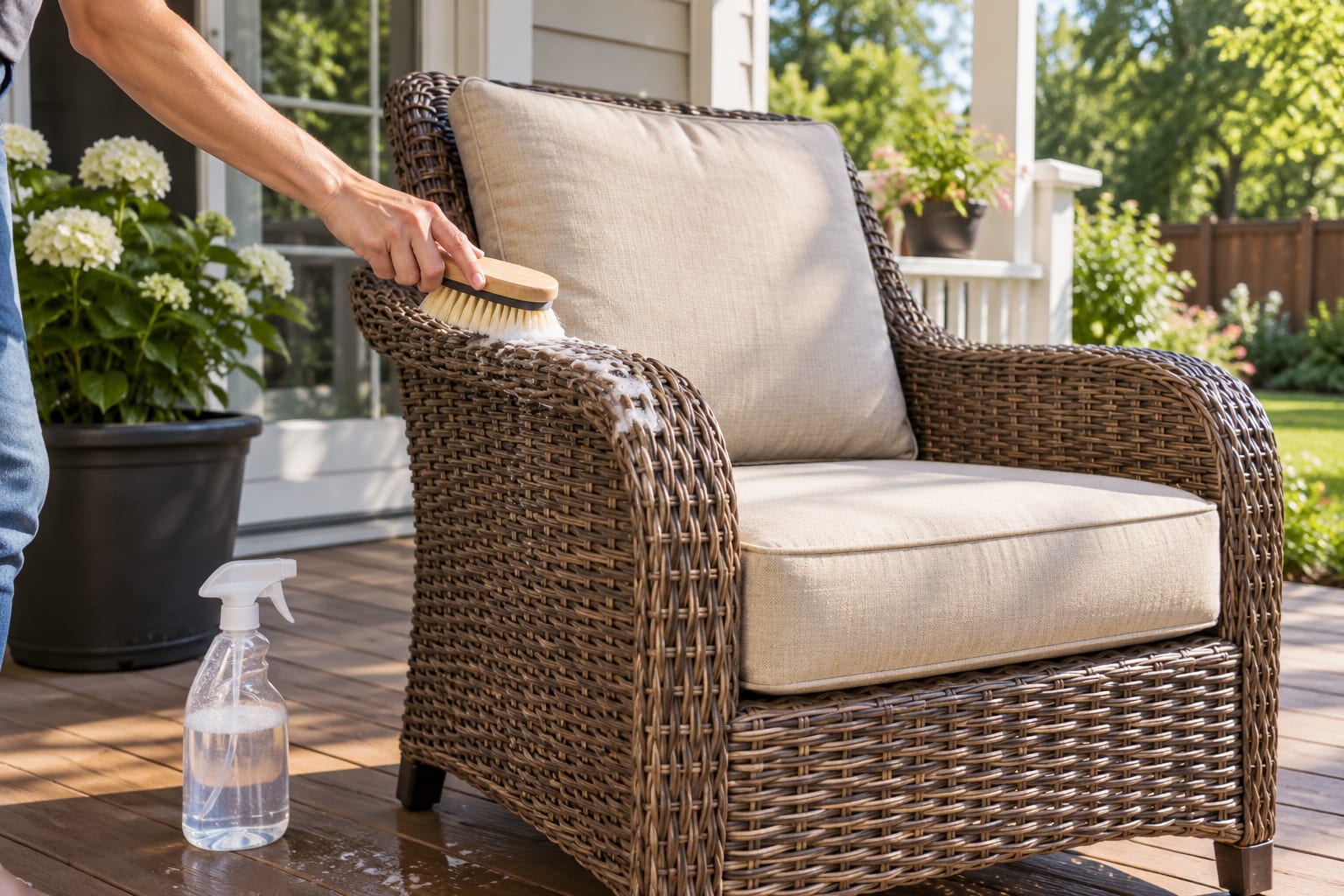
Mix a few drops of dish soap into a bucket of warm water. Dip a soft brush or cloth, shake off the excess and scrub along the weave. Use a toothbrush on tight corners. Castlery, a furniture brand, notes that synthetic wicker tolerates a slightly stronger solution than natural wicker, but stay with mild soap and avoid abrasive cleaners.
Step 3: Rinse and Dry in the Shade
Rinse with a garden hose or clean buckets of water until no suds remain. Soap left in the weave attracts dirt and leaves a film. Williamsburg Wicker recommends letting resin wicker air dry in the shade, which prevents water spots and mildew. Tip the chair to drain water from the legs and underside of the seat, and do not put cushions back until both are dry.
How to Clean Natural Wicker, Rattan and Rush
Step 1: Dust the Weave
Natural fibers are dry and brittle, so start gently. Use a soft brush or vacuum brush attachment, and a toothbrush for crevices. Williamsburg Wicker also mentions compressed air as a way to blow dirt out of a tight weave.
Step 2: Wipe With a Damp Cloth
Mix a few drops of dish soap in warm water. Wring a cloth out well so it is damp, never dripping, and wipe along the weave. Castlery warns that prolonged water causes sagging, warping and brittleness in natural wicker, and Williamsburg Wicker likewise says to avoid too much soap and water. Rinse by wiping with a second cloth dampened with clean water.
Step 3: Dry Fast, Out of Direct Sun
Blot with a dry cloth, then dry the chair with a fan or in the shade. Williamsburg Wicker stresses that natural wicker must be totally dry to prevent mold and mildew. It also says natural wicker deteriorates faster in sunlight and weather, so keep it on a covered porch or indoors. To prevent dryness, the same source suggests wiping occasionally with a damp cloth containing a few drops of lemon oil, or applying a light coat of furniture polish.
Is It Okay to Hose Down Wicker Furniture?
It depends on the material. Hosing is fine for resin wicker, which Williamsburg Wicker describes as waterproof, as long as you use a gentle spray and let it drain and dry afterward. Do not hose natural wicker. Soaking makes the fibers swell and can loosen the weave, so wipe it instead. Whatever the material, never aim a pressure washer at wicker, because the jet can split strands and push water into the frame.
Mildew, White and Painted Wicker
Removing Mildew
For mildew on resin wicker, Williamsburg Wicker suggests a paste of warm water and baking soda, or a mildew remover, scrubbed on gently and rinsed off right away to avoid bleaching or fading. Castlery recommends a 50/50 mix of white vinegar and water, applied with a cloth, left briefly, wiped clean and dried completely. On natural wicker, keep the moisture to a minimum: dab the spot, wipe it clean and dry it with a fan. Then work out why it got wet. Covers help, and our guide to patio furniture covers shows the options.
Cleaning White Wicker
White wicker shows dirt quickly, but the method is the same as for any wicker of its type. Dust it dry first, wash with mild soap, and rinse well so no film remains. Skip harsh chemicals. If a stain does not lift, try the baking soda paste on resin and test it on a hidden spot before scrubbing the visible side.
Cleaning Painted Wicker
Painted wicker is almost always natural wicker with a coat of paint, so use the damp cloth method and nothing stronger. Scrubbing hard or soaking can lift flaking paint. If the paint is already chipped, clean around it gently and see our guide on how to repair wicker patio furniture before you repaint.
Can You Clean Wicker With Murphy’s Oil Soap or Vinegar?
Both are mild enough to use with care. Vinegar diluted with an equal amount of water is one of the cleaning mixes Castlery suggests for mildew. Murphy’s oil soap is a mild liquid soap, so it fits the advice from Williamsburg Wicker to stick with mild soap, but use only a little, wring the cloth well, and rinse it off. Test either on a hidden spot first, and follow the maker’s care sheet if you have one.
How to Make Wicker Look New Again
A deep clean does most of the work: dust, wash, rinse and dry fully. After that, treat what cleaning cannot fix. For natural wicker that has gone dry, the occasional lemon oil or light furniture polish wipe suggested by Williamsburg Wicker helps keep it from drying out. Faded resin is a sign of too much sun, so move the chair into shade or cover it when not in use. Williamsburg Wicker notes that prolonged sunlight causes fading in resin wicker. For loose strands, cracked weave or flaking paint, cleaning will not be enough, and our wicker repair guide covers those fixes.
Cushions and Covers
Wicker chairs stay cleaner when the cushions and covers do their job. Take cushions off before you wash the frame, and let them dry fully before they go back, since damp foam against wicker is a common source of mildew. If yours are worn, see our picks for outdoor cushions, and cover the chairs in the off season with one of the patio furniture covers we recommend. For other materials, our guide to how to clean patio furniture covers metal, wood and plastic.
Cleaning Kit
You can clean most wicker with what is already in the house: a vacuum brush attachment, dish soap, warm water and a few cloths. One tool worth buying is a brush that fits the weave.

OXO Good Grips Heavy Duty Scrub Brush
A hand scrub brush is the right tool for resin wicker. A firm but not wire-hard brush with a grip works soap into the weave along the strands, and the head is small enough to reach under the seat. Use it on resin wicker only, with light pressure, and keep to a soft cloth and toothbrush for natural wicker.
✅ Pros
- Comfortable grip for scrubbing
- Small head reaches under seats
- Also useful for other patio furniture
❌ Cons
- Too stiff for natural wicker
- Press lightly to avoid scratching resin
Best For: Washing resin wicker chairs and other outdoor furniture.
❓ Frequently Asked Questions
Keep reading: how to repair wicker patio furniture, how to clean patio furniture, best outdoor furniture, best outdoor sectional sofas and best hanging egg chairs.