How to Keep Outdoor Cushions From Blowing Away
On this page
The short answer to how to keep outdoor cushions from blowing away: fasten them to the furniture with ties or hook-and-loop strips, stop them sliding with a non-slip pad, or weigh loose pillows from the inside. Whatever you choose, store the cushions before a storm, because no fastener beats taking the cushion out of the wind. Below are seven fixes, ordered from the cheapest to the firmest, plus steps for sewing on your own ties and a few tips for the furniture itself.
Why Outdoor Cushions Blow Away
A seat cushion is a big, flat, light object. Most are foam or fiberfill in a fabric shell, so there is plenty of surface for wind to push on and very little weight to push against. Add a slick, water-resistant cover on a smooth seat of metal, resin or sealed wood, and there is nothing to hold the cushion where you put it.
Gusts do not have to be dramatic. A cushion that slides an inch with every breeze ends up crooked, then on the floor, then across the yard. The fix is to give the cushion something to hold on to, add weight, or take it out of the wind altogether.
7 Ways to Keep Patio Cushions From Blowing Away
We list these from the cheapest and quickest to the firmest. Most patios do best with two of them together, such as ties plus storage before a storm.
1. Cushion Ties
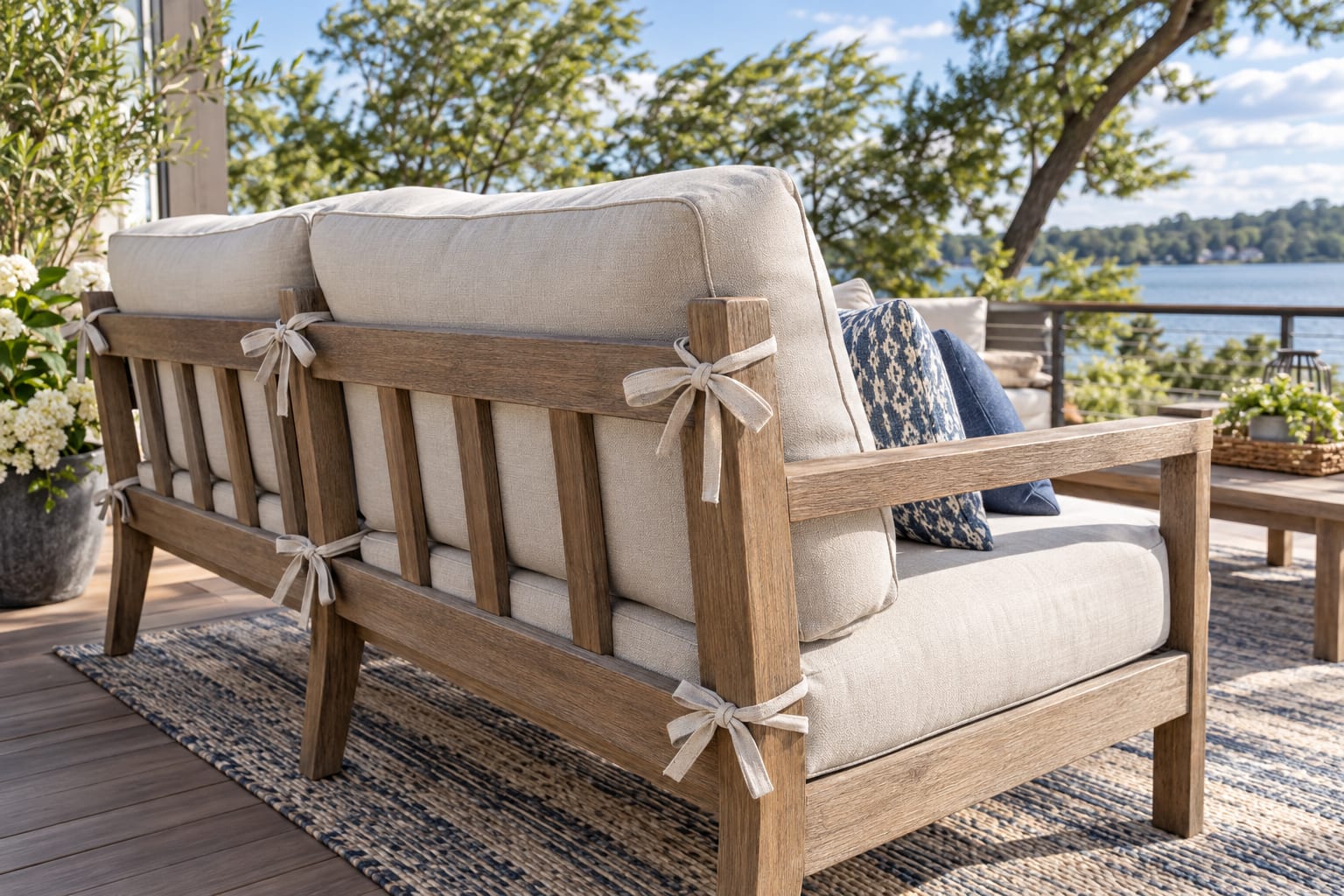
Ties are the classic fix, and the reason many good cushions come with them already sewn in. A pair of fabric ties at the back corners wraps around the chair frame or the back slats and knots in a few seconds. Ties hold a cushion against both sliding and lifting, which makes them a good first choice for chairs with slatted or open backs. If your cushions have no ties, you can add them: see the steps below. If you are shopping, look for cushions with ties built in; our best outdoor cushions guide covers them.
2. Hook-and-Loop Strips
Hook-and-loop fasteners (the generic name for Velcro) let you attach a cushion directly to the seat, with no knot to tie. One strip goes on the cushion underside and the matching strip goes on the furniture. They work best on frames you can stick or staple to, such as a wood seat or a fabric sling. Make sure you buy a version made for outdoor use, since indoor adhesive and hooks degrade with sun, rain and temperature swings. Check the pack to see that it is rated for outdoor use before you buy.
3. Non-Slip Grip Pads
A rubberized grip pad, the kind sold as rug or drawer liner, goes between the cushion and the seat. It adds friction so the cushion stops sliding forward when you sit down and shifting sideways in light wind. Grip pads do nothing against a real gust that gets under the cushion, so pair them with ties or keep them for sheltered patios. They also suit chair seats where you cannot attach anything. Choose a pad that is rated for outdoor use and rinse it now and then, because dirt and moisture reduce grip.
4. Pillow Weights
Throw pillows are the easiest items to lose, and fasteners rarely suit them. Pillow weights are small weighted inserts, often a sealed pouch of filler, that you slip inside the cover to hold the pillow down. If you try a weighted insert, make sure it is waterproof and sealed, and avoid loose sand or gravel that can leak out and rot the fabric. Weights suit pillows and back cushions best; for large seat cushions, ties or a pad are usually the better route.
5. Zip Ties on Wicker
Wicker and rattan furniture is woven, which gives you plenty of anchor points. Many people searching for how to secure outdoor cushions to wicker furniture end up with the same answer: thread a plastic zip tie or a length of cord through the weave and around the cushion's corner loop or seam, then pull it snug and trim the tail. Choose outdoor-rated, UV-stable ties in a color close to your furniture so they disappear, and keep the knots or tails on the underside where they cannot scratch anyone. Cut and replace them at the end of the season; they are cheap.
6. Heavier Cushions
If your cushions are thin or light, the real issue may be the cushions. Denser foam and thicker, fitted seat cushions have more weight and a deeper seat to settle into, and they sit better on the frame. Our best outdoor cushions roundup covers cushions worth keeping; if yours are sagging or faded as well as blowing around, replacing them may save you buying five other fixes. If the foam is fine and only the cover is worn, new outdoor cushion covers bring it back.
7. Cushion Storage
Every other fix reduces the odds of a cushion leaving; storage removes them. Put cushions away when you finish for the day, and always before a storm or a forecast of strong wind. A waterproof deck box beside the seating makes this a ten-second job, so it actually happens. See our best deck boxes for options, and our guide to storing patio furniture for the off-season. Storage also protects cushions from rain, mildew and sun fading, so they last longer as well as stay put.
How to Add Ties to Outdoor Cushions
Cushions without ties are easy to upgrade. The related searches for this topic include how to add ties to outdoor cushions and cushion ties for outdoor furniture, and the job is simple enough for a beginner with a needle and thread.
What You Need
- Outdoor-rated twill tape, grosgrain ribbon or cut strips of outdoor fabric
- UV-resistant outdoor thread (polyester or bonded nylon, not cotton)
- Scissors, a lighter or fray sealant for the ends, and a needle or sewing machine
Steps
- Mark where the ties should meet the frame. For a seat cushion, that is usually the two back corners, level with the chair's back posts or slats.
- Cut four pieces of tape, each long enough to wrap the post or slat and tie a bow, with a little extra. Seal the cut ends with a flame or fray sealant so they do not unravel.
- Fold each piece in half. Sew the folded center to the cushion cover's seam at each mark, with two or three passes of stitching.
- Stitch a square with a cross through it on each seam for a firmer hold, rather than a single line.
- Tie each pair around the frame and test by lifting the cushion. If it comes up easily, shorten the ties or move them closer to the corner.
If you would rather not sew, fabric glue or an iron-on patch sometimes works indoors, but outdoor covers are coated and washed often, so stitching lasts longer.
Securing the Furniture Too
Searchers also ask how to stop patio furniture from blowing away and how to secure patio furniture in high winds. The answer is the same idea as for cushions: add weight, add anchors, or take it out of the wind.
Add Weight and Anchors
Lightweight aluminum and resin chairs are the usual casualties. Heavier frames of teak, iron or filled steel resist wind better. For existing pieces, place chairs close together or against a wall, and link them with a cable or chain if you have a deck or patio where you can fix an eye bolt. Umbrellas are the other flyaway risk: close them, and a heavy umbrella base keeps them upright when open.
Cover or Stow Before a Storm
Before a storm, stack chairs and tuck them against the house, or move them into a shed or garage. If they must stay out, a fitted cover with straps keeps wind from catching it: see our best patio furniture covers. Loose covers act like sails, so pull every strap tight.
A Simple Cushion Kit
If you want one setup that covers most patios, build it from these four parts:
- Outdoor hook-and-loop strips for seat cushions on frames you can stick or staple to.
- Non-slip grip pads for chairs where you cannot fasten anything.
- Pillow weights for throw pillows and back cushions.
- A deck box beside the seating, so storage takes seconds. See our best deck boxes.
❓ Frequently Asked Questions
Conclusion
Start with the cheapest fix that suits your furniture: ties on slatted chairs, hook-and-loop strips on flat seats, weights for throw pillows, and a grip pad where nothing else attaches. Then make storage a habit, because a cushion in a deck box cannot blow away. Finally, pull cushions inside before any serious wind, and secure the furniture so it stays put as well.
Related guides: best outdoor cushions, best outdoor cushion covers, best deck boxes, how to store patio furniture and best patio furniture covers.