Buying guide
How to Wash Outdoor Cushions
As an Amazon Associate we earn from qualifying purchases. Our picks are researched from the manufacturers’ specifications and are our own editorial opinion.
On this page
To wash outdoor cushions, start by reading the care tag. If the covers zip off and the maker allows it, wash them in the machine on a cold, gentle cycle. If the covers are fixed, scrub gently by hand with a soft brush and mild soap, rinse until the water runs clear, and let the cushions air dry on their edge in the sun. The rest of this guide walks through each case, plus mildew, drying and how to keep cushions clean longer.
Two rules save most cushions. Never use more soap than you can rinse out, because leftover soap attracts dirt. And never put heat on outdoor fabric: no hot dryer, no hot water. If you are still shopping, see our guides to the best outdoor cushions and the best outdoor cushion covers.
Check the Label First
Outdoor cushions look alike but are not made alike. The cover fabric is the thing that matters, and the care tag or the product page names it. If the tag is gone, search the brand and model for the care instructions, or treat the cushion as the most delicate case: cold water, mild soap, no bleach, no machine.
Solution-Dyed Acrylic
Solution-dyed acrylic, the fabric type behind brands like Sunbrella, has its color all the way through each fiber, so it holds up to repeated cleaning better than most. The makers still give limits. Sunbrella’s own cleaning page calls for 1/4 cup of mild soap per gallon of lukewarm water for hand washing, a cold, delicate machine cycle for removable covers, and air drying only.
Olefin and Polyester
Olefin (also sold as polypropylene) and polyester cost less and are common on budget cushions. Treat both gently: cool water, mild soap, a soft brush. Test any cleaner on a hidden corner first, and skip bleach unless the maker says it is safe.
Foam Fill and Quick-Dry Foam
The fill matters as much as the cover. Standard foam soaks up water and dries slowly, which is where mildew starts. Open-cell, quick-dry foam lets water run through, so it is the better choice for cushions you plan to hose down. Whatever the fill, the golden rule is the same: do not drench a cushion you cannot dry within a day.
How to Wash Removable Cushion Covers
This is the easy case, and the answer to can I wash my outdoor cushions in the washing machine is yes for the cover, if the tag or the maker's guide allows it. Sunbrella also says to check with the furniture maker before you remove the casing. Whatever the brand, never machine wash a cushion with the foam still inside it.
Machine Washing Step by Step
- Take the foam out and set it aside. Unzip every cover and shake off loose dirt, leaves and cobwebs outside.
- Close the zippers so they do not snag the fabric or the drum.
- Use cold water and the delicate cycle with a mild detergent, in line with the Sunbrella guide above. Skip fabric softener.
- Wash covers in a light load. A crowded drum rubs the fabric and leaves soap behind.
- Do not use the dryer. Sunbrella says its fabric should only be allowed to air dry. Hang them or put them back on slightly damp and let the foam hold them in shape.
Hand Washing Removable Covers
If the maker says no machine, or the covers are too big, wash them in a tub or lay them flat on a clean driveway. Mix mild soap into water at the strength the maker gives (1/4 cup per gallon is the figure in the Sunbrella guide), work it in with a soft brush, and rinse with a hose until no suds remain. The how to clean patio furniture guide covers frames, tables and the rest of the set.
When Not to Use the Machine
Skip the machine if the cover has a bonded waterproof backing, if the tag says spot clean only, or if the fabric is stiff vinyl or coated. Machine washing can also wear down a water-repellent finish, so plan to re-treat the covers with a fabric protector once they are dry.
How to Clean Cushions With Non-Removable Covers
People ask how to clean cushions with non-removable covers because they cannot soak or machine wash them. The method is the same for every fixed-cover cushion: clean the surface, keep the foam as dry as you can, and rinse well.
Step by Step
- Dry brush first. Brush off dust, pollen and bird droppings once they have dried. Wet dirt turns to mud and gets pushed in.
- Mix a mild solution. A few drops of mild dish soap in a bucket of cool water is enough. For Sunbrella fabric, the maker gives 1/4 cup of mild soap per gallon of lukewarm water.
- Scrub lightly. Use a soft sponge or a soft-bristle brush and work in small sections, moving with the weave. Hard scrubbing roughens the fabric and drives dirt deeper.
- Rinse thoroughly. Hose the cushion with fresh water until the suds are gone. Soap left in the fabric dries sticky and attracts new dirt.
- Squeeze out the water. Press the cushion with a clean towel, then stand it up to dry.
Is Dish Soap Safe?
A mild dish soap such as Dawn is a common choice for hand washing, as long as you use a small amount and rinse it all out. Avoid harsh degreasers, detergents with bleach or strong solvents unless the care tag allows them. When in doubt, test a corner at the back of the cushion first.
Using a Fabric Cleaner
For dirt that soap alone will not lift, use a cleaner made for upholstery fabric and follow the label. Spray, wait the time stated, agitate with a soft brush and rinse. This works well on greasy marks from sunscreen and food.
Removing Mildew and Stains
Mildew shows up as gray, black or green spots, and as a musty smell. It needs moisture and shade, so removing it is only half the job: you also have to dry the cushion fast afterward.
Bleach, Only Where the Maker Allows It
Bleach is the strongest mildew killer, and it can ruin the wrong fabric. Use it only if the maker allows it. For Sunbrella fabric, the maker gives 1 cup of bleach plus 1/4 cup of mild soap per gallon of water, left to soak into the fabric for 15 minutes before you scrub and then rinsed completely. Wear gloves, work outdoors, and never mix bleach with other cleaners. If your fabric is not on the approved list, skip this step.
Mildew Without Bleach
Without bleach, brush off the dry growth outdoors, wash with mild soap and a soft brush, rinse well and dry in direct sun, which slows regrowth. Light mildew often comes out this way. Deep, old stains in a fixed cushion may not. A cover you can remove and replace is then the cheaper fix than a new set.
What About Vinegar?
Many people try vinegar diluted with water as a gentler option. Treat it as a light-duty step for odors, not a proven mildew treatment, check the care tag first, and rinse well. Never combine vinegar and bleach.
Drying Without Mildew
Drying is where most cushion cleaning goes wrong. A cushion that stays damp for days will grow mildew within the week, however clean it was. Dry every washed cushion completely before you use it or put it away.
Stand Them on Edge
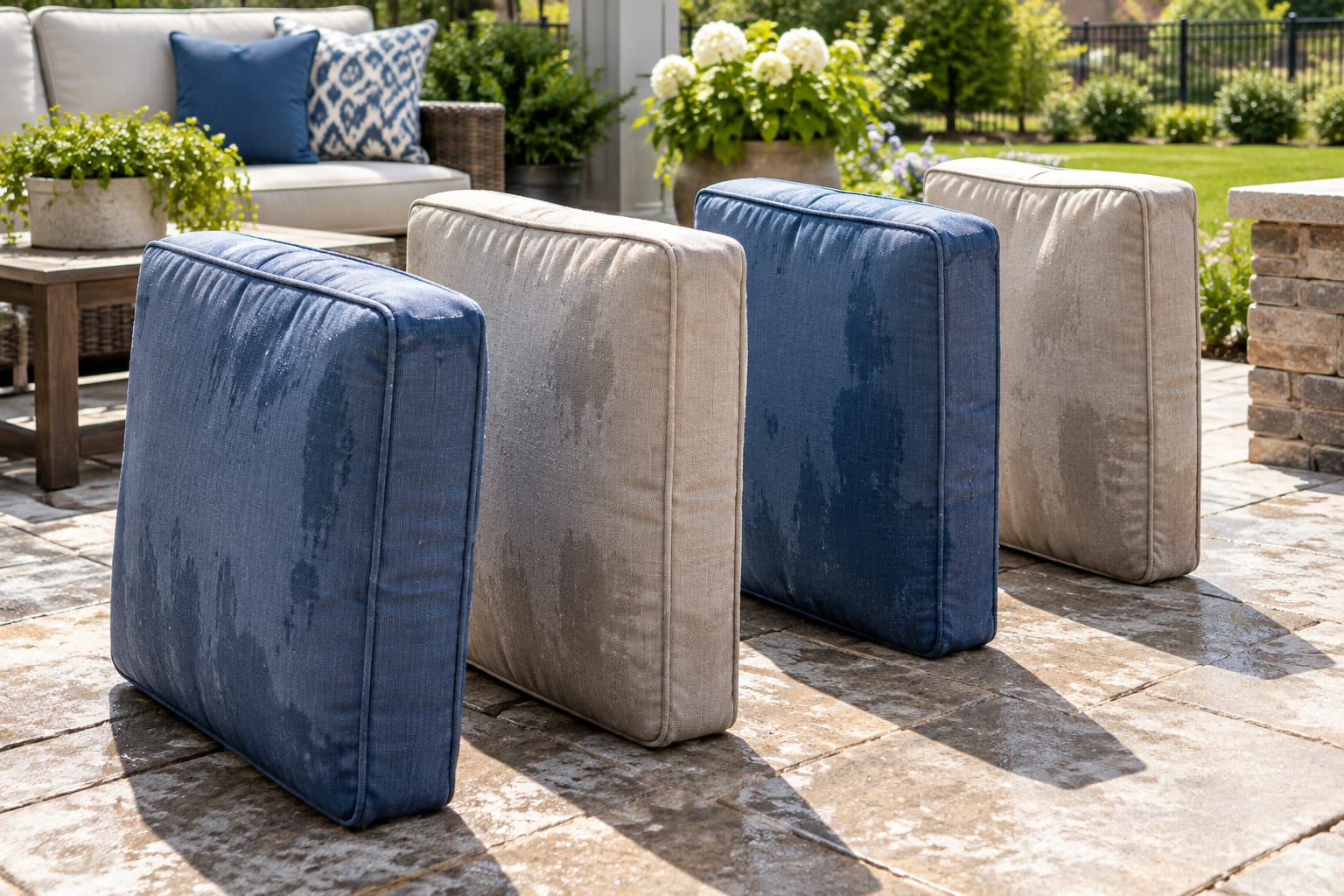
Lay a cushion flat and the water pools in the middle. Stand it on its long edge, lean it against a wall or railing, and turn it every few hours so each side faces the sun and air. Flip it end to end as well. If you have a drying rack or a clean mesh surface, use that so air reaches the underside.
Sun and Airflow, Not Heat
Choose a breezy, dry day and put the cushions where the sun reaches them. Do not use a hair dryer, a heater or a hot dryer: Sunbrella says to air dry only, and heat can warp foam and weaken seams. Squeeze foam gently from the center out to push water through it, and leave it until it is dry to the core.
Quick-Dry Foam Helps
If your cushions stay wet for days, the fill is the problem. Replacement cushions with quick-dry foam drain and dry faster, which cuts the odds of mildew from the start. See the best outdoor cushions for options.
Keeping Cushions Clean Longer
Protect the Fabric
A fabric protector spray, applied to clean, dry cushions, helps water bead and makes spills easier to wipe. Choose one made for outdoor fabric, follow the can, and reapply after a machine wash or at the start of each season. Protector helps with spills; it does not make a cushion waterproof. Our patio furniture waterproofing guide explains the difference.
Cover and Store Them
Cushions last longest when they are not left in the rain. Bring them in before storms and over winter, or keep them in a deck box. Our guide to how to store patio furniture covers the whole routine, and a set of outdoor cushion covers protects the seat when you cannot move it.
Clean Little and Often
Brush off dirt and debris weekly in the season, wipe spills at once, and do a gentle hand wash once or twice a year. Small, regular care prevents the deep stains that need bleach.
The Kit We Recommend
You do not need much. A good brush and a fabric cleaner cover most jobs, plus a fabric protector for afterward.

ForceField Fabric Cleaner
ForceField Fabric Cleaner is our pick for stains soap will not lift. The 22 oz Professional Strength cleaner is sold for water-safe fabrics and fibers, including upholstery, clothing, rugs and carpeting. Use it on a hidden corner first, then spot treat, agitate with a soft brush and rinse, following the label.
Best For: Spot treating greasy or stubborn marks on fixed-cover cushions.

OXO Good Grips Heavy Duty Scrub Brush
The OXO Good Grips Heavy Duty Scrub Brush is our pick for the frames and feet you clean on the same day. It is a stiff hand brush with a grip you can lean on. Keep it off the cushion fabric itself: Sunbrella warns against hard bristle brushes on its fabric, so use a sponge or a very soft brush on the covers.
Best For: Scrubbing sturdy covers, frames and the feet of the furniture.
Fabric Protector
Finish with an outdoor-rated fabric protector spray matched to your fabric. Our patio furniture cleaning guide covers the Scotchgard outdoor spray we recommend for re-proofing cushions after a wash.
❓ Frequently Asked Questions
Keep going: how to clean patio furniture, how to store patio furniture, best outdoor cushions and best outdoor cushion covers. More how-to help: our guide on how to clean Sunbrella cushion covers.