Buying guide
How to Clean Pavers
As an Amazon Associate we earn from qualifying purchases. Our picks are researched from the manufacturers’ specifications and are our own editorial opinion.
On this page
Knowing how to clean pavers starts with what is on them. Moss and algae need a different fix from oil, rust or the white haze called efflorescence, and the wrong cleaner can leave a patch that looks worse than the dirt did. The short version: brush off loose debris, treat the stain, wash gently, rinse, let the pavers dry fully, then refill any joint sand that washed out. Below are the methods with and without a pressure washer, the cleaners worth buying and what to do about vinegar.
Working on furniture instead of the ground? See how to clean patio furniture. Everything below is for the paving itself.
Before You Start: What Kind of Dirt Is It?
Match the cleaner to the stain, because pavers can be dulled, faded or stripped of joint sand by a method that suits something else. Start with a dry sweep and pick weeds and moss out of the joints. Family Handyman suggests a small slot screwdriver, removing as little of the underlying sand as possible.
Algae, Moss and Mildew
Green and black stains in shade are organic growth. Wet & Forget’s listing says its concentrate removes green and black stains from moss, mold, mildew and algae with no scrubbing, rinsing or pressure washing: mix 1 part concentrate with 5 parts water in a garden sprayer, spray a dry surface and apply when no rain is forecast for the next 4 to 5 hours. It also says green stains clear within 1 to 2 weeks and heavy ones can take months. Homes & Gardens, describing the same product, says it takes a few weeks to kill off moss and algae.
Oil and Grease
Fresh oil is easier to deal with than old oil. Blot what you can, then use a cleaner whose label names oil and grease. Simple Green’s Oxy Solve listing, for instance, says it removes oil stains, grease and automotive fluids from driveways, walkways and patios. Follow the label for dwell time, and repeat on old stains instead of scrubbing harder.
Rust Stains
Rust marks usually come from metal furniture legs and planters. The same Simple Green listing says it removes rust stains, and acid cleaners made for pavers list embedded rust too, as covered in the efflorescence section below. If the rust is coming from your furniture, our guide on how to fix rusty patio furniture stops it at the source.
White Haze
A white, chalky film that disappears when the pavers are wet is probably efflorescence, covered in its own section below. It is not dirt, so scrubbing will not help.
How to Clean Pavers With a Pressure Washer
A pressure washer is the fastest way to lift ground-in dirt, but it is also the quickest way to strip out the sand between the stones. Treat it as a gentle tool: low setting, wide tip, quick passes.
Set Up and Test
Family Handyman says to fit a less forceful, white 40 degree nozzle and test a dirty, out-of-the-way corner, then let it dry. If there is damage, hand-wash instead. If the corner is clean and undamaged, carry on, and if it is undamaged but still dirty, repeat the test with the more aggressive green 25 degree nozzle. Unilock says a pressure washer on a low setting can handle tougher stains, using a fan-angled tip held at knee height at a 45 degree angle to avoid dislodging the joint sand. Upgraded Home advises cold water, because warm water can disturb polymeric sand.
Wash in Passes
- Sweep first. Remove leaves and loose grit so you are not grinding it in.
- Pre-treat stains. Apply the cleaner that matches the stain and let it dwell as the label says.
- Wash each paver briefly. Family Handyman says to avoid lengthy spraying of any one spot, which could damage the pavers.
- Keep the spray out of the joints. Family Handyman warns that spraying directly into joint lines dislodges the sand.
- Rinse and dry. Let the pavers dry completely and check for leftover dirt before deciding whether to wash again.
Wear hearing protection, as Family Handyman reminds. When you finish, look at the joints: if sand has washed out, see the re-sanding section below.
How to Clean Pavers Without a Pressure Washer
You do not need a pressure washer for most patios. A stiff brush, a hose and the right cleaner will do the job, and the sand stays where it is.
Brush and Detergent
Family Handyman mixes Dawn dish soap with water in a bucket until it lathers, scrubs with a stiff brush and rinses with a hose. It says to avoid scrubbing directly in the joints between pavers, because that dislodges the sand. Unilock lists soap and water or a mild detergent as the first option for common spills and dirt.
Paver Cleaners Worth Buying
For organic growth and set-in dirt, a ready-to-use outdoor cleaner saves effort. These three suit different jobs.

Simple Green Oxy Solve Concrete and Driveway Cleaner
Simple Green’s listing says Oxy Solve cleans driveways, walkways, patios and masonry, removes oil, rust and grease stains and uses peroxide instead of harsh chemicals. The product is sold as a concrete and driveway pressure washer cleaner.
✅ Pros
- Names oil, rust and grease on the listing
- Peroxide-based, per the listing
❌ Cons
- Not aimed at moss and algae
- Needs a test patch like any cleaner
Best For: oil spots and general grime on concrete pavers.

Wet & Forget Outdoor Cleaner Concentrate, 128 oz
This is a spray-on, walk-away cleaner for green and black growth. The listing says to mix 1 part concentrate with 5 parts water, spray a dry surface on a cool day, do not rinse, and apply when rain is not forecast for 4 to 5 hours. It works with the wind and rain over time.
✅ Pros
- No scrubbing or rinsing, per the listing
- Treats moss, mold, mildew and algae
- Bleach-free formula
❌ Cons
- Results take weeks, longer for heavy stains
- Needs a dry window after spraying
Best For: shady patios with green or black growth and a gardener’s patience.
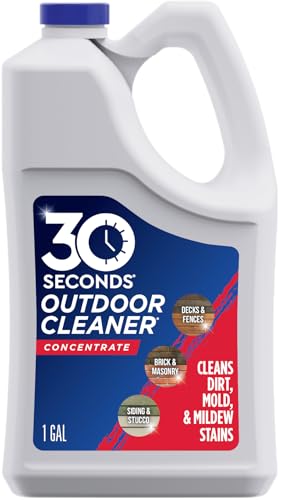
30 SECONDS Outdoor Cleaner Concentrate, 1 Gallon
The listing describes a concentrate you mix 1 to 1 with water for stains from mold, mildew, dirt and grime on concrete, brick and masonry, and says results can appear right away. It also says the formula is safe around plants and lawn when used as directed.
✅ Pros
- Mix and spray, with quick results per the listing
- Works on concrete, brick and masonry
- Plant and lawn safe when used as directed, per the listing
❌ Cons
- Heavy growth may need a second pass
- Rinse as the label directs
Best For: a faster pre-treat when you want to see results the same day.
Can You Clean Pavers With Vinegar?
On concrete pavers, yes. Unilock says white distilled vinegar works well, applied for 10 to 15 minutes before rinsing. On natural stone, no: vinegar is acidic and can strip sealant and etch the surface. Test first either way.
When Vinegar Is Fine
Use it for light mineral spotting and general dullness on concrete pavers. Wet the area, apply, wait the 10 to 15 minutes Unilock suggests, scrub lightly and rinse well with plain water so no acid is left behind. Do not leave it to dry on the surface.
When to Skip It
Granite Gold, a stone care brand, says vinegar can strip sealant, stain the surface and etch natural stone, ranging from spotting and dulling to damage that needs refinishing, and recommends a cleaner formulated for natural stone. Its article names marble and granite, not paving. Limestone, travertine and some sandstone pavers are calcium based, so we would treat them the same way until your supplier says otherwise. We did not find paver-maker guidance for the vinegar and baking soda mix that appears in searches, so we stick to vinegar on its own or a cleaner made for pavers.
Removing Efflorescence
Efflorescence is a white haze that can appear on pavers a few weeks or months after installation. Cambridge Pavers says it is more pronounced on dark pavers, disappears when the surface is wet and forms when lime rises to the surface and reacts with carbon dioxide in the air, leaving a white haze of calcium carbonate. It is not a defect, and the page says there is no reason to be concerned that the pavers are damaged.
Wait or Clean
Cambridge Pavers says the condition usually corrects itself with time and exposure to the elements. If you want it gone sooner, a commercial cleaner made for concrete pavers will remove it, and it says to clean soon after it appears. It also says the haze may reappear as long as the chemical reaction continues, so you may need to repeat.
How to Use an Efflorescence Cleaner
Most paver cleaners contain acid and detergents, so use them carefully, according to Cambridge Pavers. Follow the label and always test a small, inconspicuous area first. Careless cleaning can cause injury, damage and discoloration. The Paver Magic listing below says to sweep loose dust, apply with an acid-resistant brush, sprayer or sponge, allow dwell time, rinse with cold water and air dry.

Quality Chemical Paver Magic Hi-Power Acid Cleaner, 128 oz
Paver Magic is an acid cleaner for pavers, concrete and brick, and the listing says it targets embedded rust, dirt and stains. It says to test a hidden area first, dilute with 3 to 4 parts water if needed, and warns that the colorants on some pavers may fade. It also advises sealing after cleaning.
✅ Pros
- Made for pavers, concrete and brick, per the listing
- Treats embedded rust and mineral deposits
❌ Cons
- Acid: gloves, eye protection and a test patch are a must
- May fade the color of some pavers, per the listing
Best For: stubborn efflorescence, mineral deposits and rust on concrete pavers.
Re-Sanding and Sealing After Cleaning
Cleaning is the moment to fix the joints. A paver patio only stays tight if the sand between the stones is full, and washing is the most common reason it goes missing. If you are laying a new patio instead, start with how to build a paver patio.
Refilling Polymeric Sand
Upgraded Home notes that if you pressure wash the joints you will need to reapply sand. Unilock says to scrape failed polymeric sand out to a depth of about 1.5 to 2 inches so the new sand bonds with what remains, then refill the joints to about 1/8 inch below the beveled edge of the pavers and mist, following the manufacturer’s watering instructions. For the watering, Upgraded Home’s polymeric sand routine is to sweep the sand in evenly, compact it, remove sand left on the surface, mist from high to low, wait about 15 minutes, then apply a lighter mist, and let it cure for 24 hours before foot traffic. Cover the area if rain is expected.
For the refill, DOMINATOR Polymeric Sand comes in 40 lb bags in several colors, and its listing says it suits joints from 1/8 in to 4 in wide with a minimum depth of 1 in. Match the color to the sand already in your joints, and follow the watering steps on the bag you buy.
Do You Need a Sealer?
Not always. Unilock says its pavers are durable with or without sealer, and that a sealer should only go on when you have a dry-weather window of 24 to 48 hours. Family Handyman says you do not need to seal after every cleaning and that sealing too often can leave a film that discolors the pavers, with typical resealing every three to five years. If you do seal, the surface must be dry and clean first.
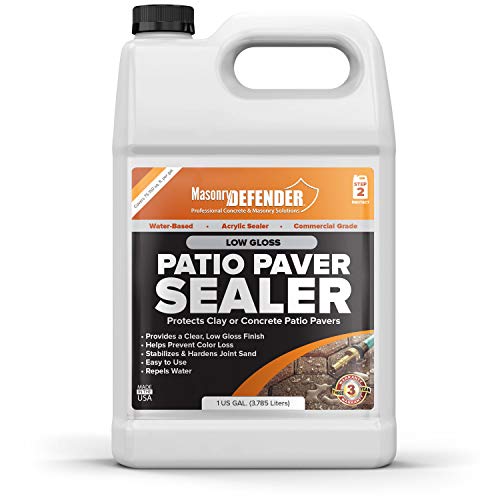
MasonryDefender Patio Paver Sealer, Low Gloss, 1 Gallon
The listing describes a water-based acrylic sealer that dries clear with a low gloss finish, seals joints by hardening and stabilizing the joint sand, and suits clay brick, paver stones and most horizontal concrete. It says to apply with a pump-up sprayer and back brush and to let the first coat dry for one to two hours before a second.
✅ Pros
- Water-based with a low gloss finish
- Also stabilizes joint sand, per the listing
- Easy soap-and-water cleanup
❌ Cons
- Needs a long dry window and a fully dry surface
- Test a corner before sealing the whole patio
Best For: sealing a clean concrete or brick paver patio after the joints are refilled.
Frequently Asked Questions
Keep reading: How to Build a Paver Patio · Best Patio Tiles · How to Clean Patio Furniture · How to Clean an Outdoor Rug · How to Fix Rusty Patio Furniture