How to Fix Rusty Patio Furniture
On this page
To fix rusty patio furniture, brush or sand off the loose rust, treat what is left with a rust remover or rust converter, then seal the bare metal with a rust-inhibiting primer and finish with an exterior metal paint in thin coats. Most steel and wrought iron pieces can be brought back this way, and the work is mostly patience between coats. Below we cover which metals rust, what to do for light and heavy rust, how vinegar, WD-40 and rust converters compare, and how to keep rust from returning.
Which Metals Rust
Rust is iron oxide, so only metal that contains iron can rust. That means steel and wrought iron, the two most common materials in older bistro sets, mesh chairs and heavy garden benches. If a magnet sticks to your frame, it contains iron and will rust once the paint or coating wears through.
Steel and Wrought Iron
Rust usually starts where the coating is thin or damaged: chips, scratches, weld seams and the places where water sits. Once moisture reaches bare metal, the rust spreads under the paint and lifts it in bubbles. Fixing the first spots early saves a full strip later.
Aluminum Does Not Rust
The Aluminum Association explains that aluminum has an enormous affinity for oxygen, so a thin film of aluminum oxide forms almost instantly on its surface, and that this film is inert and protects the metal underneath from further reaction (Recommendations for Storage and Handling of Aluminum Powders and Paste, 4th edition). In practice, white or gray chalky patches on an aluminum frame are oxidation, not rust. A scrub and a rinse usually handles it, and our guide to cleaning patio furniture covers that job.
Light Surface Rust: Clean and Protect
If the rust is only a light orange bloom and the paint around it is sound, you do not need to strip the whole piece. Treat the spots, seal them and move on.
Steps for Light Rust
- Wash the piece with warm water and dish soap to remove dirt and oils, then let it dry fully.
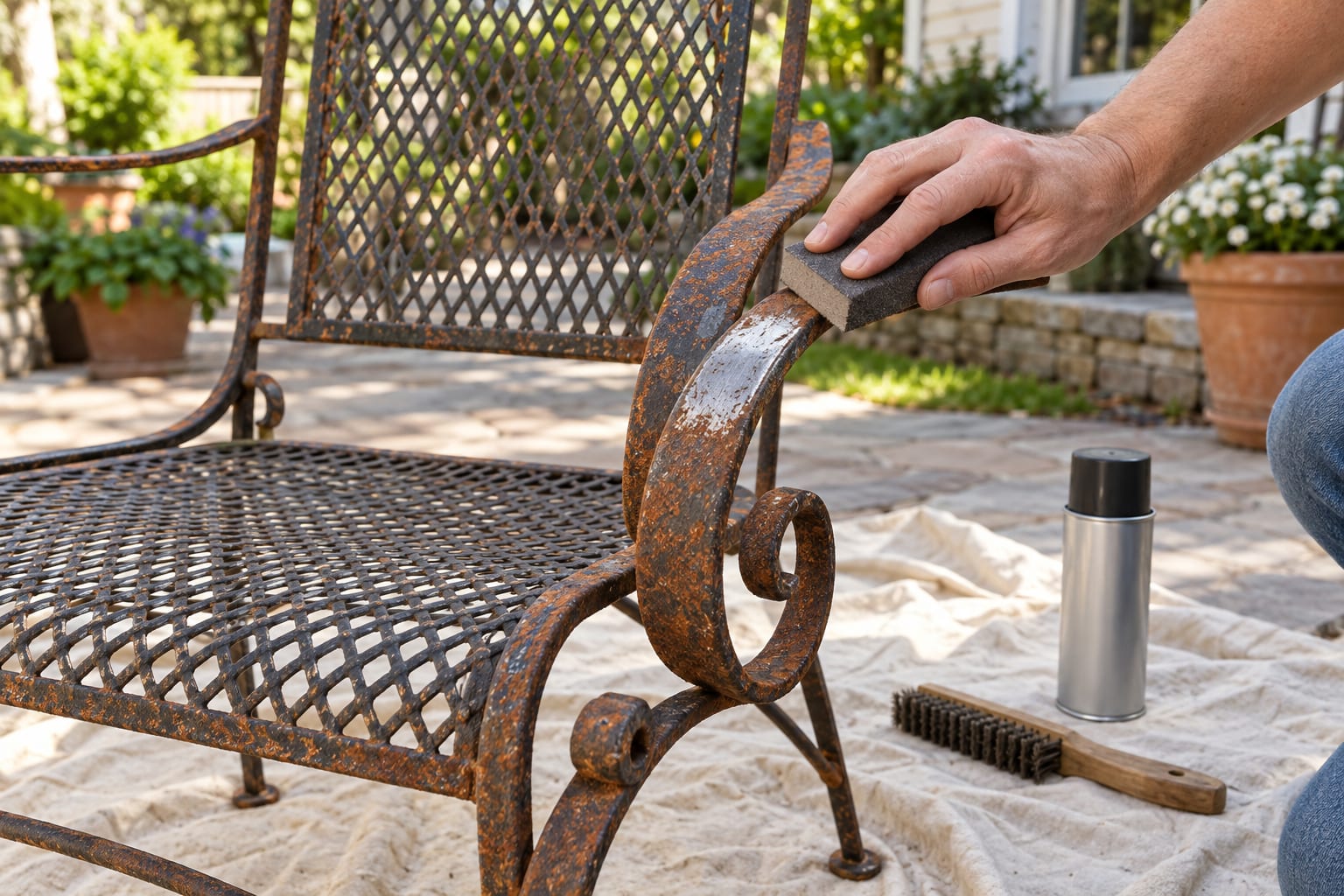
- Scrub the rusty spots with a wire brush or medium-grit sandpaper until the loose rust is gone and the edges of the surrounding paint feel smooth.
- Wipe away the dust with a damp cloth and let the metal dry.
- Apply a rust-inhibiting primer to the bare spots, following the can for dry time.
- Touch up with exterior metal paint that matches the frame, in thin coats.
Why Thin Coats Matter
Thick coats run, stay soft underneath and chip sooner. Several thin coats, each allowed to dry as the label directs, build a harder film that holds up to sun and rain. Rushing the recoat is the most common reason a repaint fails after one season.
Heavy Rust: Sand, Convert, Prime and Paint
When the paint is flaking, the rust is pitted or the metal feels rough over large areas, go back to bare metal and rebuild the finish. This takes a weekend with drying time, and it is worth it for a frame that is otherwise sound.
Strip and Sand
Work outdoors or in a ventilated space. Scrape off flaking paint and scale with a putty knife or scraper, then go over the whole frame with a wire brush, working into corners and curls of wrought iron. Follow with sandpaper or a sanding sponge until you have a dull, uniform surface. Wear gloves, safety glasses and a dust mask, since old paint can be harder to deal with than it looks.
Treat Remaining Rust
Pits and crevices keep rust that a brush cannot reach. Treat those with a rust remover or a rust converter, whichever suits the piece, and follow its label exactly for contact time and rinsing. We compare the options in the next section. Make sure the metal is fully dry afterward, because new rust can bloom on bare steel quickly.
Prime and Paint
Apply a rust-inhibiting primer to the bare, dry metal in thin, even coats, and let it dry as the label directs before recoating. Then paint with an exterior metal paint made for outdoor use. Spray cans give a smoother finish on mesh and scrollwork; a brush gets paint into tight joints. Let the final coat cure fully before you put cushions or weight on the frame, since the surface can feel dry before it is hard.
Vinegar vs WD-40 vs Rust Converter
These three get compared constantly, but they do different jobs. Vinegar and soak-type removers dissolve rust. A converter changes the rust that remains so you can paint over it. Here is how they line up for patio furniture.
| White vinegar | WD-40 Specialist Rust Remover Soak | Rust converter | |
|---|---|---|---|
| What it does | Acid that dissolves rust over a long soak | Ready-to-use soak that, per WD-40, removes rust without scraping, chipping or scrubbing | Treats remaining rust so it can be primed and painted, per the maker's label |
| Best for | Small parts such as bolts, hinges and hardware | Items that fit in a container: small parts, tools, hardware | Pitted areas and joints a brush cannot clean fully |
| Contact time | Not stated | At least 30 minutes for light rust, overnight (8 hours) for medium rust, up to 24 hours for heavy rust (WD-40 technical data sheet) | See the label of the product you buy |
| After use | Rinse, dry fully, then protect or paint | Rinse with water and dry completely; soak again if rust remains in pits (WD-40 technical data sheet) | Prime and paint as the label directs |
| Limit | Slow, and large frames do not fit in a bucket | Works on pieces you can fully submerge, not on a whole chair frame | Does not replace removing loose, flaking rust first |
Which Is Better, Vinegar or WD-40?
It depends on which WD-40 product you mean. The soak times above come from the technical data sheet for WD-40 Specialist Rust Remover Soak, a dedicated rust-removal soak for items that can be submerged, and WD-40 says it will not harm surrounding parts, trim, gaskets or paint. Vinegar is a household alternative for small hardware. Neither one handles a large frame on its own: for a whole chair, brushing, sanding and a converter or primer do the heavy lifting.
What Dissolves Rust Without Scrubbing?
A soak does. Submerging a removable part in a rust-dissolving liquid lets the product do the work, which is how WD-40 describes its Specialist Rust Remover Soak. Remove dirt and grease first with a degreaser, since WD-40 says oils reduce its effectiveness, and keep in mind that this only suits parts small enough to submerge.
Rust on Joints, Feet and Bolts
These are the spots where water collects and where paint wears off first, so they often need their own treatment.
Joints and Welds
Rust in seams creeps under the paint on both sides. Clean it out with a small wire brush or a rotary brush attachment, treat the crevice, and prime it before painting. Use a small brush rather than a spray in tight seams, so primer reaches the bottom of the joint instead of bridging over it.
Feet and Leg Ends
Leg ends sit in puddles and wet leaves, so they rust from the bottom up. If the metal is thin or flaking through, stop and think about replacing the piece (see below). If it is sound, clean, prime and paint the underside as well, then fit plastic or rubber glides so the metal does not sit on wet ground.
Bolts, Screws and Hardware
Remove bolts and small hardware where you can and soak them in a rust remover, as above, then rinse and dry. Replace any that are pitted or have lost their head shape with stainless steel or galvanized fasteners, which resist rust better than plain steel. Rust at a bolt can weaken a joint, so tighten everything once the frame is back together.
Preventing Rust Next Season
Rust needs bare metal, water and time. Take away any of the three and it slows or stops.
Cover It
A fitted cover keeps rain, dew and leaf litter off the frame. Pick a breathable one so moisture does not get trapped underneath. We compare the options in our guide to the best patio furniture covers.
Store It for Winter
A dry garage or shed beats any cover. Clean the frame, make sure it is completely dry, and store it off the floor. Our guide on how to store patio furniture has the full routine.
Touch Up Early
Check the frame each spring. A chip or scratch touched up with primer and paint takes minutes, while a rust patch left for a year takes a weekend. Keep a small can of the matching paint with your cushions.
When to Replace Instead
Repainting cannot restore metal that has rusted through. Replace the piece if you can push a finger or screwdriver through a leg or seat frame, if welds have cracked, or if a chair flexes or wobbles under weight. A structural failure is a safety risk, and no coating fixes it. For a sense of what to expect from different materials, see how long patio furniture lasts. If you are shopping for a replacement, look at our picks for the best bistro sets, and look for aluminum or powder-coated frames that resist rust.
❓ Frequently Asked Questions
Related guides: how to clean patio furniture, best patio furniture covers, how to store patio furniture and how long patio furniture lasts.