Buying guide
How to Paint Wicker Furniture
As an Amazon Associate we earn from qualifying purchases. Our picks are researched from the manufacturers’ specifications and are our own editorial opinion.
On this page
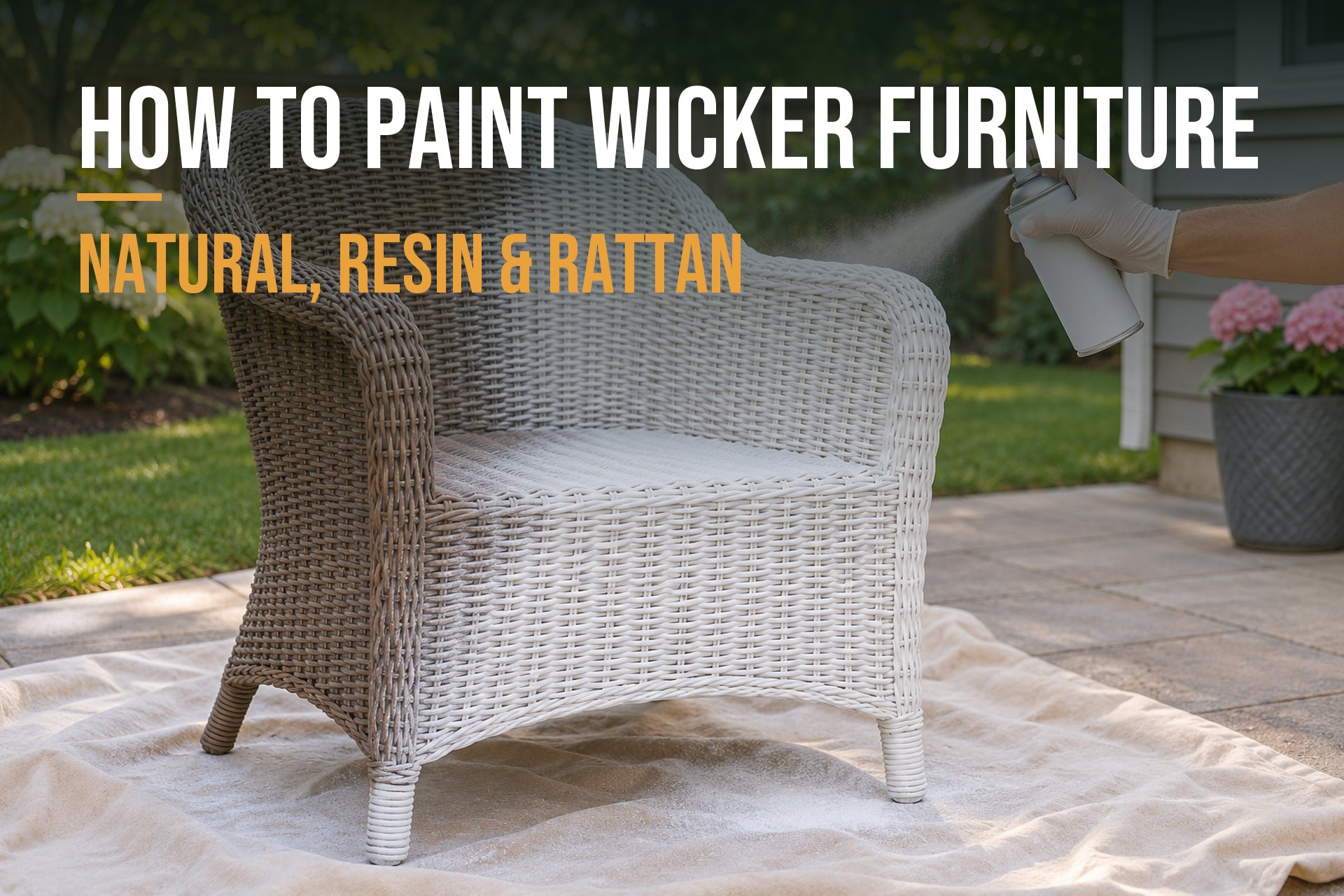
To paint wicker furniture, clean the weave and let it dry, mask off cushions, glass and anything you do not want painted, prime the piece if it is resin, and then spray several light coats, turning the chair so the paint reaches every strand. Spray paint is the easiest way to coat a woven surface, and the main decision is the primer, which depends on what the wicker is made of.
This guide covers natural wicker and rattan, resin (all-weather) wicker, the questions about brush, spray and chalk paint, and how to look after a painted chair. If the weave is broken or loose, fix it first with our guide on how to repair wicker patio furniture.
Natural or Resin Wicker? Check First
Wicker is a weaving style, not a material, and the material changes the prep. Our guide on how to clean wicker chairs explains how to tell natural wicker, rattan and rush from synthetic resin wicker, so look there if you are not sure.
Resin Wicker
Resin wicker is plastic. Outdoor wicker is very often resin. It is smooth, slightly glossy and does not soak up water. Because it is plastic, paint sticks best with a plastic primer or a paint made for plastic.
Natural Wicker and Rattan
Natural wicker is plant fiber, such as rattan, willow or rush. It is porous and it soaks up paint, so go easy on water while you clean it. The prep is lighter than for resin, but the chair should be dry through before you paint.
A Quick Test
Find an underside strand or a broken end. A fibrous, grainy or splintering strand is natural. A uniform, smooth strand that looks like a plastic cord is resin. If the piece is painted already, our guide's section on cleaning painted wicker covers what is under the paint.
What You Need
Paint We Would Pick
Rust-Oleum's data sheet says its Painter's Touch 2X Ultra Cover sprays give twice the coverage on wood, metal, most plastic, wicker and more compared with its other general purpose paints (Rust-Oleum's technical data sheet for Painter's Touch 2X Ultra Cover Satin sprays). Painter's Touch 2X Ultra Cover in Ultra Matte White is a clean option for white wicker, and Painter's Touch 2X Ultra Cover in Satin Nutmeg is a warm brown for a natural look. Krylon COLORmaxx Spray Paint and Primer is a paint-and-primer in one for indoor and outdoor use. Check the label of any product for the surfaces it lists before you buy.
How to Spray Paint Wicker, Step by Step
Work outdoors in the shade or in a well ventilated area. Rust-Oleum says to use its sprays between 50 and 90°F with humidity below 65%, and to avoid spraying in very windy and dusty conditions (Rust-Oleum's technical data sheet for Painter's Touch 2X Ultra Cover Satin sprays).
Clean and Dry the Weave
Dust the chair with a vacuum brush attachment and work a soft brush into the weave. Then wash with mild soap and water, rinse and let it dry completely in the shade. Rust-Oleum says to remove all dirt, grease, oil, salt and chemical contaminants with a detergent, rinse with fresh water and allow to thoroughly dry (Rust-Oleum's technical data sheet for Painter's Touch 2X Ultra Cover Satin sprays). Paint over dust or damp fiber peels.
Protect What You Do Not Want Painted
Remove the cushions. Tape the glides, any glass tabletop and hardware. Krylon's resin chair project says to tape off every area you do not want painted, and to remove the tape immediately after you finish spraying (Krylon). Lay a drop cloth wider than you think you need, because spray drifts.
Prime Where Needed
Resin wicker needs a primer, as the next section explains. On natural wicker, a primer is not required by the sprays we read about, but a coat of primer helps a light color cover a dark weave. Rust-Oleum says a Painter's Touch primer gives excellent adhesion and hiding.
Spray Light Coats From Several Angles
Shake the can for one minute after the mixing ball rattles. Hold it upright 10 to 16 inches from the chair and spray in a steady back-and-forth motion, with a slight overlap, keeping the can moving (Rust-Oleum's technical data sheet for Painter's Touch 2X Ultra Cover Satin sprays). Rust-Oleum says to apply two or more light coats a few minutes apart to avoid drips and runs. A woven surface hides gaps, so turn the chair and spray from the top, the sides and underneath, and tilt it to reach inside the weave. Krylon's project guide also says to apply multiple thin coats until the surface is completely covered.
Let It Dry and Cure
Rust-Oleum says the paint dries to the touch in 20 minutes and can be handled in 1 hour at 70°F and 50% humidity, with more time needed when it is cooler, and says to apply a second coat within 1 hour or after 48 hours (Rust-Oleum's technical data sheet for Painter's Touch 2X Ultra Cover Satin sprays). Krylon says its Fusion paint can be handled in about one hour and needs a full seven days to cure to full chip and scratch resistance on its resin chair (Krylon). Keep the furniture away from rain and cushions for the first day or two, and use it gently for the first week.
Painting Resin (All-Weather) Wicker
Resin wicker is the one that fights back. Smooth plastic gives paint little to grip, and a coat that looks fine in the garage can scratch off in a season.
Use a Primer for Plastic
Rust-Oleum's technical data sheet says its Plastic Primer Spray is designed to prepare plastic surfaces to be topcoated with any Rust-Oleum color or finish, and lists polypropylene, polystyrene, resin, PVC, fiberglass and vinyl plastics such as chairs, tables and planters (Rust-Oleum's technical data sheet for its Plastic Primer Spray). Rust-Oleum Plastic Primer Spray is that product. The sheet gives its own steps: for new plastic, wipe it thoroughly with paint thinner to promote adhesion, and for aged or weathered surfaces, remove loose material with a brush, clean with soap and water, rinse and let dry, with sanding if the surface is glossy or smooth.
One Thin Coat of Primer
The same sheet says to apply one thin coat of primer instead of one heavy coat or multiple coats for best adhesion, to apply an oil-based finish coat after 1 hour, and that maximum adhesion is reached in 5 to 7 days (Rust-Oleum's technical data sheet for its Plastic Primer Spray). Read the topcoat's label, since a latex paint needs a longer wait, which the sheet gives as 4 hours.
What If You Skip the Primer?
The paint may not hold. A primer for plastic exists because plastic is slick, and Rust-Oleum cautions that some plastics, such as polyethylene, are made in a way that can hinder maximum adhesion, so test in a hidden spot first. A paint-and-primer product like the Krylon Fusion line is made to bond to plastic without a separate primer, and Krylon's resin chair project does not use one, but it still tells you to clean the chair, and to wipe new plastic with paint thinner for best results (Krylon).
Brush, Spray or Chalk Paint?
Spray is the practical choice for most woven chairs, because a brush leaves paint pooled in the weave and misses the back of each strand.
Spray
Spray gets into the weave and gives an even coat. It needs a ventilated space and masking, but it is the only method that reaches every strand without a lot of fuss.
Brush
A brush works for small repairs and touch-ups, and some people use one on natural wicker. Use a small, stiff brush, work paint into the weave a little at a time and wipe off drips as you go.
Chalk Paint
Chalk paint is popular on indoor wicker. For outdoor use, follow the paint maker's instructions on sealing and exposure, and see whether it is rated for exterior surfaces before you commit. Spray enamel remains our pick for outdoor wicker.
Can You Change the Color of Rattan?
Yes. Rattan is a natural fiber and takes paint, and Rust-Oleum lists wicker among the surfaces its Painter's Touch 2X sprays are made for (Rust-Oleum's technical data sheet for Painter's Touch 2X Ultra Cover Satin sprays). A dark brown chair can become white or any other color, though going light over dark will take more coats, so a coat of primer first helps. Stain is another route on bare rattan, but it works with the existing tone rather than hiding it.
Test the Color First
If you are not sure of the color, paint one hidden rung first and let it dry before you commit to the whole chair.
Caring for Painted Wicker
A painted chair needs the same gentle care as any other wicker, with a few extra habits to protect the paint.
Cleaning
Dust it with a soft brush and wipe it with mild soap and water. Our guide on how to clean wicker chairs has a section on cleaning painted wicker.
Repairs
If a strand breaks, repair it before you touch up the paint. Our guide to repairing wicker patio furniture walks through it, and it even answers whether you can paint after a repair.
Protection
A cover protects the finish from rain and sun between uses. Our guide to the best patio furniture covers compares options. If the wicker chairs are beyond saving, our best outdoor chairs guide has replacements, and a metal frame under a wicker set can be refinished the way we describe in how to paint metal patio furniture.
❓ Frequently Asked Questions
Sources
Rust-Oleum, Painter's Touch 2X Ultra Cover Satin Sprays and Specialty Plastic Primer Spray technical data sheets; Krylon, Resin Chair project and Fusion All-In-One Textured. Temperatures, times and coat counts above come from these pages and from the label on your own can, which always wins.
Related: How to repair wicker patio furniture · How to clean wicker chairs · How to paint metal patio furniture · Best patio furniture covers · Best outdoor chairs