Guide
How Big Should A Patio Be For A Fire Pit? (Read This First!)
As an Amazon Associate I earn from qualifying purchases. All claims are strictly my personal opinion.

On this page
- The Minimum Patio Size for Fire Pit Safety
- Key Factors to Consider When Sizing Your Patio
- The Ideal Diameter and Layout
- Patio Depth and Foundation Considerations
- Patio Design and Aesthetics
- Special Considerations for Specific Scenarios
- Maintenance and Longevity
- Local Codes and Regulations
- Fire Pits Sized for Small, Medium and Large Patios
- Frequently Asked Questions
- Conclusion
Imagine yourself on a cool evening, gathered around a crackling fire with loved ones nearby, enjoying the warmth and ambiance of an outdoor fire pit. Sounds perfect, right? But before you start planning that cozy scene, there’s a critical question to answer: how big should your patio actually be to safely and comfortably accommodate a fire pit? Whether you’re working with a sprawling backyard or a modest urban garden, getting the size right makes all the difference between a functional gathering space and one that feels cramped or unsafe.
The Minimum Patio Size for Fire Pit Safety
%22%2F%3E%3Cline%20x1%3D%22200%22%20y1%3D%22160%22%20x2%3D%22200%22%20y2%3D%22236%22%20stroke%3D%22%23475569%22%20stroke-width%3D%221%22%20stroke-dasharray%3D%224%2C3%22%20marker-end%3D%22url(%23arr)%22%2F%3E%3Ctext%20x%3D%22208%22%20y%3D%2268%22%3E6%20ft%20clearance%3C%2Ftext%3E%3Ctext%20x%3D%22208%22%20y%3D%22205%22%3E6%20ft%20clearance%3C%2Ftext%3E%3Ctext%20x%3D%2262%22%20y%3D%2216%22%3E12%20ft%3C%2Ftext%3E%3Cline%20x1%3D%2260%22%20y1%3D%22250%22%20x2%3D%22340%22%20y2%3D%22250%22%20stroke%3D%22%23475569%22%20stroke-width%3D%221%22%20marker-end%3D%22url(%23arr)%22%2F%3E%3Ctext%20x%3D%22155%22%20y%3D%22258%22%3E12%20ft%20min.%20patio%3C%2Ftext%3E%3C%2Fsvg%3E)
A patio should be at least 12 x 12 feet to safely accommodate a fire pit: and specifically, there should be at least 6 feet of distance in all directions around the fire pit itself. This applies primarily to wood burning fire pits, which require more precaution due to open flames and heat radiation.
If you’re considering a propane fire pit instead, you have a bit more flexibility: these closed-flame options don’t need quite as much surrounding space, though you should still maintain at least 3-4 feet of clearance for safe operation and guest comfort.
Key Factors to Consider When Sizing Your Patio
Simply knowing the minimum dimensions isn’t enough: you’ll want to think through several practical factors that influence the ideal size for your specific situation.
Available Backyard Space
Start by measuring your outdoor area and understanding what you’re working with. Mark out a 12 x 12 foot square with tape or spray paint to visualize how that footprint feels in your actual yard. This simple step helps you see whether you’ll be cramped or have room to spare for additional outdoor furniture like lounge chairs, side tables, or benches.
Expected Seating Capacity
Think realistically about how many guests you typically entertain. A small gathering of 4-6 people can work comfortably on a 12 x 12 patio, but if you regularly host 10-15 people, you’ll want closer to a 16 x 16 or even 20 x 20 foot space. According to outdoor living experts, a patio of 400-500 square feet (roughly 20 x 20 feet) can accommodate 10-15 people with room for chairs, movement, and comfort.
Heat and Wind Patterns
Consider your local climate and weather. If your backyard experiences strong winds frequently, a larger patio can help shield guests from gusts that disrupt the fire and make seating uncomfortable. Similarly, in areas with intense heat, extra space allows heat to dissipate more naturally rather than concentrating around your guests.
Surrounding Structures and Vegetation
Keep flammable materials well away from your fire pit. You’ll need to maintain safe clearance from wooden fences, overhanging tree branches, storage sheds, and the exterior of your home. This clearance requirement often means your practical patio size needs to be larger than the bare minimum to keep everything safe.
The Ideal Diameter and Layout
While 12 x 12 feet is the safe minimum, many design experts recommend thinking in circular terms. The diameter of your patio should ideally be at least twice as large as the diameter of your fire pit. This creates a well-balanced, proportionate outdoor space that doesn’t feel cramped.
For example, if your fire pit has a 3-foot diameter, your patio should span at least 6 feet in radius from the pit’s center, meaning a minimum 12-foot diameter circle. A 14 to 16-foot diameter is even better, giving you genuine flexibility for seating, movement, and additional elements.
Seating Arrangements and Clearance
Beyond the fire pit itself, plan for at least 3 feet of open space between the pit’s edge and any chairs, benches, or outdoor furniture. This prevents guests from sitting too close to heat and flying embers, and it gives people room to move around without bumping into furniture or each other. Aim for a minimum of 10 feet of clearance from the pit to any structures like walls, fences, or your house itself.
Patio Depth and Foundation Considerations
Your patio should be dug 6-12 inches deep to create a solid, stable foundation for your fire pit and ensure proper air circulation. This depth accomplishes several things: it provides structural stability so the pit won’t shift or settle unevenly over time, it allows air to flow underneath (critical for safe combustion and heat dispersal), and it helps protect the ground from excessive heat damage.
Surface Material Matters
You have several options for patio surfaces, each with pros and cons:
- Concrete: A solid, durable choice that’s specifically designed for fire pits. Concrete resists heat and moisture, and you can clean it easily. Make sure any concrete pad is designed specifically to handle fire pit use and meets local safety codes.
- Pavers: Attractive and flexible to design around, but individual pavers can shift or crack under intense heat. Use high-heat-rated pavers and lay them on a solid base.
- Gravel: Budget-friendly and drains well, but can scatter when guests move around the pit and requires periodic raking and replenishment.
Patio Design and Aesthetics
Beyond safety, the size and layout of your patio should feel visually balanced and inviting. A fire pit that’s too small for its patio looks lonely and disconnected; one that’s too large for the surrounding space feels cramped and unsafe.
Furniture and Entertainment Space
Consider what else you want on your patio. Do you want room for a dining table, a serving station, or a small outdoor kitchen setup? Each of these elements needs its own space and shouldn’t encroach on the fire pit’s safety zone. A 20 x 20 foot patio (400 square feet) is a comfortable sweet spot for a fire pit plus a few lounge chairs, while a 24 x 24 foot space (576 square feet) allows you to add a dining area or sectional sofa without feeling crowded.
Sight Lines and Ambiance
A well-sized patio creates natural sight lines where guests can see the fire and each other without having to crane their necks. The fire pit should feel like the centerpiece of the space, with seating arranged in a semi-circle or circle around it, roughly 8-12 feet away. This distance is far enough to be safe but close enough to feel the warmth and see the flames clearly.
Special Considerations for Specific Scenarios
Here’s what this section covers:
Small Yards (Under 300 Square Feet)
If you have a compact outdoor space, a propane fire pit is often the smarter choice than a wood-burning model. Propane pits are smaller, require less clearance, and produce less ambient heat, meaning you can place them closer to structures and pack more furniture around them. A 10 x 10 foot patio with a propane pit can still feel intimate and functional.
Large Patios (500+ Square Feet)
With a large patio, you have the luxury of space. You can position your fire pit as a secondary gathering area rather than the sole focal point, leaving room for a lounge section, a cooking area, and a dining zone. This kind of layout is ideal if you entertain frequently or want your outdoor space to serve multiple purposes.
Covered Patios
If you’re thinking about a covered patio with a fire pit, you’ll need to follow stricter fire codes. Most jurisdictions don’t allow open wood-burning flames directly under solid roofs due to smoke and fire hazard. You may be limited to a propane pit with a ventilation system, or you might need to keep your pit in an open area beside a covered space.
Maintenance and Longevity
A well-sized patio with adequate clearance is easier to maintain long-term. Extra space around the fire pit means you can sweep away ash and debris without crowds, inspect the pit structure for wear, and make repairs without major disruption to your entertaining space. Additionally, proper spacing reduces the risk of heat damage to surrounding surfaces and structures, meaning your patio, furniture, and home exterior will last longer.
Cleaning and Upkeep
If you want to keep your patio looking sharp, regular cleaning of patio furniture is essential. Soot and ash from the fire pit can accumulate on nearby seating and surfaces, especially in areas with less air circulation. A larger patio with good airflow naturally reduces soot buildup and makes seasonal cleaning less of a chore.
Local Codes and Regulations
Before you finalize your patio size and fire pit placement, check your local fire code and homeowners’ association rules. Many municipalities have specific requirements for fire pit setbacks from structures, property lines, and vegetation. Some areas require a minimum 15-foot clearance from your home, while others are more lenient. Getting this right from the start saves you from costly mistakes or having to relocate your pit after construction.
Fire Pits Sized for Small, Medium and Large Patios
This section is by The Patio Pro team.
Once you know your patio size, the fire pit is the easy part. Following the guidance above, propane fire tables suit most patios because they need less clearance than a wood fire, and the table itself sets the scale. Here is one pick for each patio size, all propane, all chosen from the manufacturers' specifications. For more options, see our full guides to fire pit tables and propane fire pits.

For Small Patios: Ciays 28 Inch Propane Fire Pit Table
Added by The Patio Pro team. Specs from the manufacturer's listing.
At 28 x 28 inches, this compact fire table fits the 10 x 10 foot propane setups described above. Ciays rates it at 50,000 BTU and says it warms a space 8 to 10 feet wide. It is CSA-certified, uses a pulse ignition, and the 20 lb tank stores out of sight underneath.
Best For: small yards and patios around 10 x 10 to 12 x 12 feet.
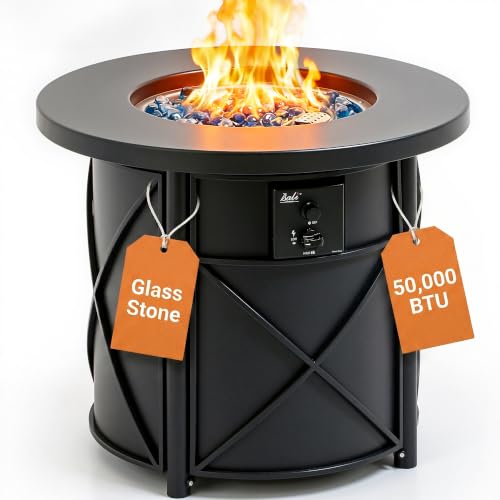
For Medium Patios: BALI OUTDOORS 30 Inch 50,000 BTU Propane Fire Pit Table
Added by The Patio Pro team. Specs from the manufacturer's listing.
A 30-inch round table with a 50,000 BTU burner, a powder-coated finish and an integrated pulse ignition. The removable cover turns it into a side or drinks table, which matters on a 12 x 12 to 16 x 16 foot patio where every piece of furniture has to earn its space.
Best For: medium patios with a circle of 4 to 6 chairs.
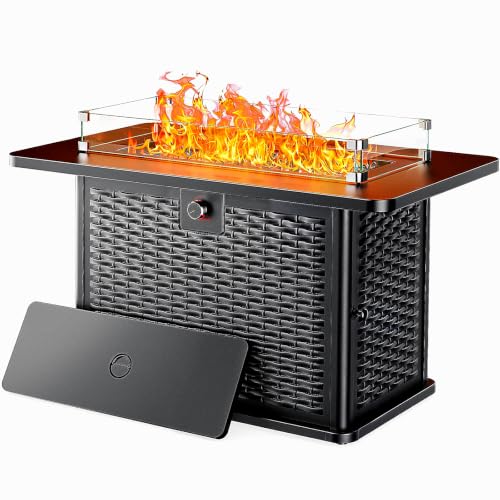
For Large Patios: Ciays 43-Inch Rectangular Propane Fire Pit (60,000 BTU)
Added by The Patio Pro team. Specs from the manufacturer's listing.
For 20 x 20 foot patios and larger, the extra heat helps reach guests on the far side. This 43-inch table puts out 60,000 BTU through a 304 stainless steel H-burner, comes with reflective glass stones and a clear wind guard, and adds a 3-inch table edge for drinks. Adjustable feet keep it level on uneven pavers.
Best For: large patios that seat 8 or more around the fire.
❓ Frequently Asked Questions
Conclusion
Creating the perfect fire pit patio is a balance between safety, comfort, and personal preference. The minimum 12 x 12 foot footprint with 6 feet of clearance around the pit gives you a safe starting point, but your ideal size will depend on how many guests you entertain, what other features you want nearby, and the specific conditions of your backyard.
Start by measuring your available space and marking out a potential patio layout. Consider whether you prefer the contained warmth of a wood-burning pit or the flexibility of a propane model. Think about your entertaining style: intimate gatherings for close friends or larger social events. Then, check your local fire codes to ensure compliance before you invest in materials or construction.
Once your patio is built and your fire pit is installed, you’ll have a dedicated outdoor space that feels balanced, safe, and genuinely inviting. Those cozy evenings you imagined at the start? They’re within reach, just with the right dimensions to make them truly enjoyable and worry-free.